In the rapidly evolving world of blockchain technology, without revealing any underlying information has become a core demand for users and developers alike. Zero-knowledge proofs (ZKPs) answer this call by enabling one party to prove knowledge of a fact or data to another party, without ever disclosing the data itself. From safeguarding financial transactions to verifying identities, ZKPs promise a new era of verifiable privacy on transparent public ledgers.
The Essence of Zero-Knowledge Proofs
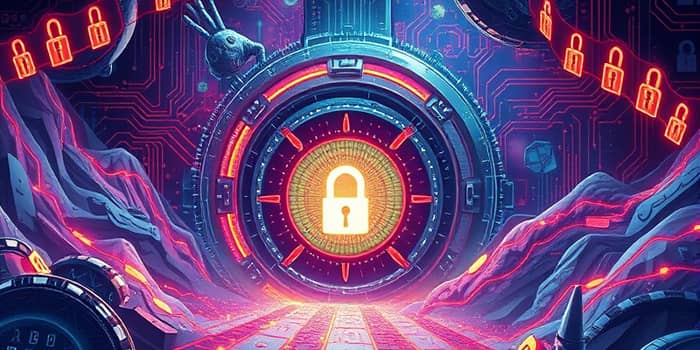
At their heart, ZKPs are built on three fundamental properties: completeness (valid proofs are accepted), soundness (invalid proofs are rejected), and zero-knowledge (no extra information is leaked). Introduced in a landmark 1985 paper, these protocols have since matured into practical tools for privacy and security. Imagine a locked cave with two paths and a secret passcode. By repeatedly navigating the correct route without revealing the code, the prover convinces the verifier of their knowledge—this mirrors how ZKP circuits function.
These proofs rely on complex mathematics—cryptographic hash functions, algebraic circuits processing inputs through gates, and elliptic curve techniques offering probabilistic verification. Through interactive or non-interactive exchanges, ZKPs build confidence without exposing private data.
Core Techniques and Building Blocks
Implementations of ZKPs vary, but they share common building blocks. Cryptographic hash functions generate random challenges, ensuring unpredictability. Circuits represent computational statements as a network of gates. Elliptic curves underpin efficient group operations that make verification succinct.
- Succinct non-interactive arguments of knowledge (zk-SNARKs): Widely adopted for their brevity and non-interactive nature, crucial for blockchain privacy.
- zk-STARKs: Quantum-resistant proofs requiring no trusted setup, offering transparency and scalability.
- ZK Range Proofs (ZKRP): Demonstrate that values lie within specified bounds without disclosing exact amounts.
Evolution of Privacy in Blockchain
The first formal study of ZKPs in 1985 laid a theoretical foundation that found practical application only decades later. In 2016, ZCash launched shielded transactions powered by zk-SNARKs, enabling users to send funds while hides sender, receiver, and amount details. Monero followed with ring signatures and stealth addresses to obfuscate on-chain data.
More recently, the emergence of layer-2 solutions such as ZK-Rollups has revolutionized scalability. By batching thousands of transactions off-chain and posting a single proof on Ethereum’s mainnet, rollups deliver faster finality and lower fees while inheriting the base layer’s security.
Practical Applications and Use Cases
ZKPs are driving innovation across multiple domains in the crypto ecosystem. Their ability to prove correctness without disclosure makes them ideal for:
- privacy-preserving transactions on decentralized ledgers, ensuring confidentiality in finance and payments.
- DeFi protocols that verify collateral ratios and proof of reserves without revealing user holdings.
- Selective disclosure in identity systems, allowing users to prove attributes like age or citizenship without sharing personal details.
Beyond these, oracles leverage ZKPs to provide verifiable off-chain data, enabling smart contracts to act on accurate real-world information without sacrificing privacy.
Looking Beyond Cryptocurrencies
The potential of zero-knowledge proofs extends far beyond blockchain finance. In decentralized identity, users could prove citizenship, academic credentials, or professional licenses without revealing names or documents. Voting platforms can verify voter eligibility while keeping ballots secret, increasing trust in electoral processes.
In AI and machine learning, ZKPs enable model owners to demonstrate the validity of a recommendation or classification without exposing proprietary training data. Supply chain and Internet of Things networks benefit from private audit trails, where participants validate compliance without revealing sensitive operational metrics.
Challenges and the Road Ahead
Despite remarkable progress, ZKPs face hurdles. Generating proofs can be computationally intensive, leading to performance bottlenecks. Some zk-SNARK systems require a trusted setup phase, though newer STARK protocols eliminate this need. Standardization, tooling improvements, and developer education remain critical to widespread adoption.
Moreover, integrating ZKPs into consumer applications demands intuitive interfaces and seamless user experiences. As the ecosystem matures, we expect more turnkey solutions that abstract underlying complexity, making zero-knowledge privacy and scalability accessible to all.
Conclusion
Zero-knowledge proofs are redefining the balance between transparency and privacy in a digital age. From financial confidentiality in shielded transactions to scalable layer-2 networks and decentralized identity frameworks, ZKPs empower users with control over their data. While technical challenges persist, ongoing innovation and real-world deployments signal a transformative future.
As blockchain and decentralized systems continue their ascent, adopting zero-knowledge techniques will be key to delivering robust, trustless, and private applications. In this new frontier, privacy and scalability walk hand-in-hand, guided by the elegant mathematics of zero-knowledge proofs.
References
- https://www.chainalysis.com/blog/introduction-to-zero-knowledge-proofs-zkps/
- https://chain.link/education-hub/zero-knowledge-proof-use-cases
- https://www.coinbase.com/learn/crypto-glossary/what-are-zero-knowledge-proofs
- https://5g.wilsoncenter.org/article/dont-trust-when-you-can-verify-primer-zero-knowledge-proofs
- https://www.circularise.com/blogs/zero-knowledge-proofs-explained-in-3-examples
- https://arxiv.org/abs/2408.00243
- https://chain.link/education/zero-knowledge-proof-zkp
- https://chain.link/education-hub/zero-knowledge-proof-projects
- https://en.wikipedia.org/wiki/Zero-knowledge_proof
- https://www.zeeve.io/blog/practical-use-cases-of-zero-knowledge-proofs/
- https://z.cash/learn/what-are-zero-knowledge-proofs/
- https://www.quicknode.com/builders-guide/best/top-10-zero-knowledge-proof-applications
- https://www.dock.io/post/zero-knowledge-proofs
- https://www.nttdata.com/global/en/insights/focus/2024/what-is-zero-knowledge-proof