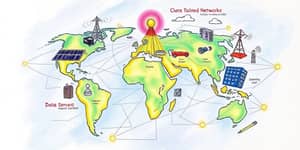
The internet is undergoing a profound transformation, evolving from passive consumption to a dynamic, user-owned ecosystem.
Web3 represents a decentralized model where power shifts from tech giants to individuals, empowering users with control over their digital lives.
This change is driven by blockchain and cryptocurrencies, offering a future where you can interact without intermediaries.
The Historical Journey: From Web1 to Web3
To understand Web3, we must look back at how the internet has evolved over decades.
Each phase has brought new capabilities and challenges, shaping our online experiences.
- Web1, in the 1990s to 2000s, was a read-only era with static pages and limited interactivity.
- Web2, from the 2000s to now, introduced read-write functionality through centralized platforms like social media.
- Web3, emerging today, adds the crucial element of ownership, enabling users to read, write, and own their data via decentralized networks.
This evolution mirrors moving from renting a house to owning it, giving you direct control over your digital neighborhood.
Web2 often led to data monopolies, where companies profited from user information without fair compensation.
In contrast, Web3 aims to rectify this by fostering communal control and transparency.
Foundational Technologies Driving Web3
Web3 relies on a suite of innovative technologies that enable decentralization and user empowerment.
These tools work together to create a trustless and permissionless internet environment.
These technologies collectively dismantle the need for intermediaries, paving the way for a more equitable internet.
For instance, blockchain ensures that data cannot be altered without consensus, enhancing security and trust.
How Web3 Works in Practice
Understanding Web3 involves seeing how users interact with these technologies daily.
Start by setting up a crypto wallet to store your digital assets and access decentralized applications.
This wallet acts as your identity, replacing traditional logins like email and password.
- Use your wallet to connect to dApps, enabling seamless transactions and data management.
- Engage in decentralized finance (DeFi) for peer-to-peer lending without banks.
- Participate in DAOs by voting with tokens to influence community decisions.
Every action is recorded on a blockchain, making it transparent and immutable.
This flow empowers you to monetize your data or assets directly, without middlemen taking a cut.
Key Applications Transforming the Digital World
Web3 is not just a concept; it's already powering real-world applications that enhance user autonomy.
From finance to governance, these innovations are reshaping industries.
- Decentralized Finance (DeFi): Offers lending, trading, and borrowing services that enhance security and anonymity compared to traditional banks.
- Decentralized Autonomous Organizations (DAOs): Community-run entities where code executes votes automatically, fostering democratic control.
- Non-Fungible Tokens (NFTs): Provide unique ownership for digital art, tickets, or collectibles, enabling resale and transfer.
- Self-Sovereign Identity: Allows users to control their digital IDs without relying on central authorities.
- Tokenization Models: Make digital assets portable, similar to physical items, opening new business opportunities.
For example, blockchain-based ticket exchanges use NFTs to prevent fraud, ensuring each ticket is tied to a real person.
This practical application shows how Web3 can solve everyday problems with innovation.
Benefits of Web3 Over Web2
Web3 offers significant advantages that empower users and foster a fairer digital economy.
These benefits address the shortcomings of the current centralized internet.
- User Control: You own your data and assets, with portable identity via wallets, preventing extraction without consent.
- Trustless Interactions: Direct peer-to-peer exchanges reduce reliance on intermediaries, thanks to immutable ledgers.
- Incentives: Earn tokens for contributing data or time, compensating you for your online activities.
- Security and Anonymity: Blockchain verification enhances authenticity, while pseudonymous wallets protect privacy.
- Opportunities: Challenges tech monopolies, enabling new players and innovative business models to thrive.
Imagine being able to sell a digital movie directly to a friend, with ownership transferred seamlessly.
This level of control transforms passive users into active participants in the digital realm.
Challenges and the Future of Web3
Despite its promise, Web3 faces hurdles that must be addressed for widespread adoption.
Awareness of these challenges helps users navigate this evolving landscape wisely.
- Terminology Confusion: The vision of Web3 can be hazy, with overlaps with concepts like the Semantic Web causing debates.
- Centralization Risks: Some aspects still rely heavily on tokens, which might not fully eliminate central points of control.
- Adoption Stage: Web3 is in early development, with many elements theoretical rather than fully implemented.
- Scalability Issues: Current blockchains may struggle with high transaction volumes, affecting user experience.
- Regulatory Uncertainty: Governments are still grappling with how to regulate cryptocurrencies and decentralized networks.
The future holds immense potential for disruption, as more people embrace decentralized tools.
By staying informed and cautious, you can leverage Web3 to build a more empowered digital life.
Practical steps include educating yourself on blockchain basics and experimenting with small-scale dApps.
Conclusion: Embracing the Web3 Revolution
Web3 is more than a technological shift; it's a movement towards a user-centric internet.
By embracing decentralization, you can reclaim control over your digital existence.
Start today by exploring crypto wallets and engaging with communities that value transparency.
This evolution promises a future where the internet serves everyone, not just corporations.
Let's build this new digital world together, one block at a time.
References
- https://www.youtube.com/watch?v=Doz47OvUAEk
- https://www.mckinsey.com/featured-insights/mckinsey-explainers/what-is-web3
- https://en.wikipedia.org/wiki/Web3
- https://www.simplilearn.com/tutorials/blockchain-tutorial/what-is-web-3-0
- https://brave.com/web3/intro-to-blockchain/
- https://bsvassociation.org/education/blockchain-101/what-is-web3/
- https://www.pwc.com/us/en/tech-effect/emerging-tech/what-is-web3.html
- https://hbr.org/2022/05/what-is-web3