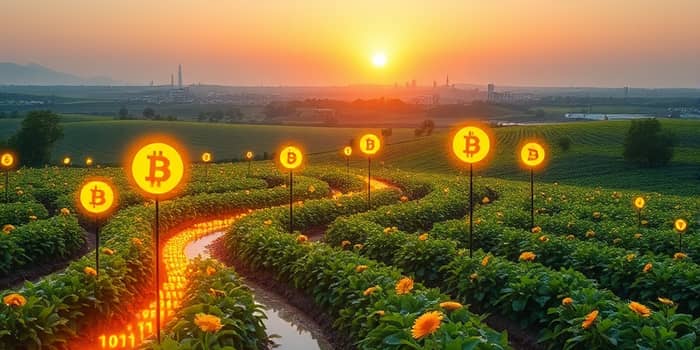
Yield farming has transformed the way crypto enthusiasts and institutions alike grow their assets. By moving beyond simple holding and staking, this dynamic approach taps into DeFi protocols to capture elevated returns on cryptocurrency deposits. In this article, we explore the foundations of yield farming, dissect advanced tactics, and offer practical guidance for building a resilient strategy.
Whether you are just starting or aiming to refine a seasoned portfolio, understanding and applying these methods can help you navigate market cycles with confidence. Let’s dive into the mechanics and opportunities that define modern yield farming.
Understanding Yield Farming Basics
At its core, yield farming involves depositing crypto into smart contracts or liquidity pools on decentralized exchanges to earn rewards. These rewards can include transaction fees, interest from lending platforms, governance tokens, or special incentive emissions. Performance is typically measured by annual percentage yield (APY), which fluctuates based on supply and demand, token incentives, and market volatility.
Unlike straightforward staking, yield farming requires an active approach. Participants often shift assets across multiple protocols—a process akin to frequent asset rotation for optimal yields. Advanced farmers layer strategies by stacking rewards, auto-compounding earnings, or even employing leverage to amplify returns.
Key Strategies for Maximizing Returns
To unlock the potential of DeFi, consider these core tactics tailored to different risk appetites and experience levels. Each strategy can be combined or adjusted as market conditions evolve.
- Liquidity Provision on AMMs: Provide equal-value token pairs (e.g., ETH/DAI) into automated market maker pools. Earn a share of trading fees based on your pool weight, then stake LP tokens for extra governance tokens.
- Auto-Compounding Vaults: Use aggregators like Yearn Finance or Beefy Finance to automate deposits, rebalancing, and compounding. This reduces manual effort and can lower gas costs through batched transactions.
- Multi-Layer Incentive Farming: Seek out pools offering base APY, protocol token emissions, and bonus rewards. New platforms often provide high short-term incentives that can be stacked for outsized yields.
- Leveraged Yield Positions: Borrow assets against collateral to increase your farming stake. While this can boost returns, it also magnifies risk, especially during sharp market moves.
- Cross-Chain Yield Aggregation: Use bridges and aggregators to access high-yield pools across multiple blockchains, spreading risk and capturing diverse reward streams.
By blending these techniques, you can adapt to changing incentives and maintain an edge as protocols roll out new token emissions or adjust fees.
Process Steps to Start Yield Farming
Embarking on your yield farming journey involves several key steps. Follow this roadmap to set up and launch your strategy:
- Create a Web3 wallet such as MetaMask or Ledger Live, enabling seamless interaction with DeFi apps.
- Acquire cryptocurrency on a reputable exchange, prioritizing assets like ETH, stablecoins (USDC, DAI), or BTC-pegged tokens.
- Research platforms and strategies using tools like DeFi Llama and APY trackers, assessing Total Value Locked (TVL) and historical performance.
- Deposit assets into selected pools or vaults, ensuring you understand lock-up periods, withdrawal fees, and reward structures.
- Monitor your positions regularly, claim earned tokens, and reinvest or rebalance as needed to optimize returns.
Popular Platforms and Comparison
A wide array of protocols supports yield farming activities. Below is a comparative overview of leading platforms:
When selecting a protocol, examine smart contract audits, emission schedules, and community governance models to gauge long-term viability.
Benefits and Potential Returns
Yield farming offers several compelling advantages. First, participants can achieve passive growth through compounding, effectively turning dormant assets into active income streams. Second, exposure to governance tokens provides early access to emerging projects with upside potential. Finally, diversifying across pools and strategies can enhance portfolio resilience, distributing risk across multiple reward sources.
During bullish market cycles, optimized farms may deliver annual yields above 100% in high-risk pools, while stablecoin-focused vaults often yield 10–20% with reduced price volatility.
Risks and Mitigation Strategies
No strategy is without hazards. Two primary concerns are impermanent loss when token prices diverge and smart contract exploits. Impermanent loss occurs when the relative price shifts in an LP pair leave you with fewer assets than if you had simply held them.
To reduce exposure, prefer stablecoin pools or IL-protected vaults, and always allocate only a small percentage of your overall portfolio to high-volatility farms. For security, choose protocols with layer 2 networks to reduce gas fees and platforms that have undergone comprehensive audits and transparent governance.
Emerging Trends Shaping 2026
Institutional participation is surging as products like Bitcoin Yield Gateway funnel capital into DeFi, marking a shift toward institutional-grade returns within regulated frameworks. Corporate treasuries are exploring decentralized yields as an alternative to traditional money market funds.
Meanwhile, innovations such as cross-chain aggregation for global opportunities and decentralized derivatives for hedge strategies are maturing, enabling more sophisticated positions that can capture yield without sacrificing capital efficiency.
Conclusion: Crafting a Sustainable Yield Farming Strategy
Building a durable yield farming plan requires both discipline and adaptability. Start with a clear asset allocation, perhaps integrating dollar-cost averaging into core holdings alongside targeted yield pools. Regularly review performance, lock-up terms, and emerging protocol updates to stay ahead of market shifts.
By combining robust research, prudent risk management, and strategic automation, you can unlock the full potential of DeFi and maximize crypto returns in 2026 and beyond.
References
- https://www.cointracker.io/blog/crypto-passive-income
- https://changelly.com/blog/what-is-yield-farming/
- https://www.quicknode.com/builders-guide/best/top-10-defi-yield-farming-platforms
- https://www.kraken.com/learn/what-is-yield-farming
- https://blockeden.xyz/blog/2026/02/08/bitcoin-institutional-yield-competition/
- https://www.britannica.com/money/cryptocurrency-yield-farming
- https://stoic.ai/blog/crypto-bull-run-2026-expert-guide-to-timeline-predictions-strategy/
- https://hedera.com/learning/defi-yield-farming/
- https://zipmex.com/blog/how-to-navigate-crypto-in-2026-expert-strategies/
- https://am.galaxy.com/insights/research/what-is-yield-farming
- https://blog.amberdata.io/institutional-crypto-flows-2026-market-analysis
- https://coinmarketcap.com/academy/article/what-is-yield-farming
- https://www.youtube.com/watch?v=_qVWp3C0D2g
- https://www.youtube.com/watch?v=dlNZ6HWc9NY
- https://a16zcrypto.com/posts/article/big-ideas-things-excited-about-crypto-2026/