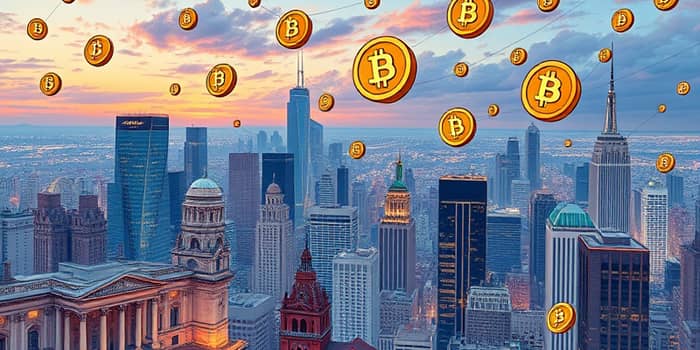
The financial world is on the brink of a revolution, one where ownership of tangible assets is no longer bound by traditional barriers. By converting real-world assets into digital tokens, we stand at the threshold of global markets accessible 24/7, unlocking opportunities for millions.
In this comprehensive exploration, we uncover the journey from bricks-and-mortar properties to programmable digital certificates, examining every step, benefit, and challenge along the way.
Understanding Tokenization of Real-World Assets
At its core, tokenization converts rights to physical or digital real-world assets—such as real estate, art, or corporate debt—into blockchain-based tokens. These tokens serve as blockchain-based digital certificates of ownership, allowing holders to buy, sell, or trade fractions of high-value assets with unprecedented ease.
Unlike purely digital cryptocurrencies or NFTs tied to unique artworks, tokenized RWAs derive their value from the underlying asset. This ensures stability and creates a bridge between traditional finance (TradFi) and decentralized finance (DeFi).
The Path to Tokenization
Transforming a tangible asset into tradable tokens involves a multi-step process that blends legal rigor with cutting-edge technology:
- Identify and appraise the asset’s market value with professional valuation services.
- Ensure full legal and regulatory compliance through off-chain formalization and registration.
- Select a suitable blockchain platform and design token features (fungible or non-fungible).
- Convert asset data into digital metadata via secure oracles for seamless onchain integration.
- Deploy smart contracts to mint, manage, and transfer tokens on an immutable ledger.
- Fractionalize ownership into smaller units and list tokens on compliant digital marketplaces.
For example, a $1 million commercial property can be split into 1,000 tokens worth $1,000 each. Smart contracts can then automatically distribute rental income to token holders, ensuring transparency and efficiency.
Diverse Asset Classes Awaiting Tokenization
Tokenization’s potential spans a broad spectrum of real-world assets, including:
- Real Estate: Residential buildings, commercial offices, undeveloped land.
- Commodities: Gold, oil, agricultural products, precious metals.
- Art and Collectibles: Paintings, sculptures, rare artifacts.
- Financial Instruments: Bonds, stocks, government securities, corporate invoices.
- Other Assets: Intellectual property rights, stablecoins pegged to fiat currency.
Transformative Benefits
Tokenization offers a suite of advantages that can reshape global finance:
Navigating Risks and Realities
Despite its promise, tokenization faces hurdles that must be addressed for sustainable growth. Regulatory uncertainty looms large; tokens may be classified as securities by one jurisdiction and commodities by another, requiring robust legal strategies.
Technological challenges also persist. Smart contract vulnerabilities, oracle integrity, and custody solutions demand vigilant security measures. Moreover, the hype surrounding tokenization must not eclipse the focus on genuine use cases and asset quality.
Nevertheless, real-world experiments—such as pilot tokenized treasury bills and rental-income-generating properties—demonstrate that tokenization is moving beyond buzzwords. Institutions like BlackRock and major banks are exploring structured tokenized funds, signaling a shift toward mainstream adoption.
A Vision for Tomorrow’s Finance
Looking ahead, tokenization could transform how we interact with assets and capital:
- 24/7 global markets where ownership positions update in real time.
- Seamless integration with DeFi protocols, enabling borrowing, lending, and yield generation on tokenized collateral.
- A democratized landscape where retail investors access institutional-grade assets.
Case studies reveal how tokenized real estate platforms are already distributing rental yields to thousands of micro-investors. Meanwhile, stablecoin frameworks provide a template for future asset-backed tokens that combine stability with programmability.
Ultimately, tokenization is more than a technological innovation—it is an invitation to reimagine ownership, liquidity, and trust. By embracing these developments, stakeholders can participate in a more inclusive and efficient financial ecosystem, unlocking trillions in illiquid markets and paving the way for enduring prosperity.
Conclusion
The tokenization of real-world assets stands as a transformative force, dissolving traditional barriers and unleashing the full potential of capital markets. As technology matures and regulations crystallize, the promise of fractional, programmable, and transparent ownership draws ever closer.
For investors, entrepreneurs, and visionaries alike, now is the moment to engage, innovate, and shape the future of finance. The tokenization revolution is underway—will you be part of it?
References
- https://www.coinbase.com/learn/crypto-glossary/what-are-real-world-assets-rwa
- https://www.elliptic.co/blockchain-basics/real-world-asset-tokenization-whats-hype-and-whats-not
- https://www.weforum.org/stories/2025/08/tokenization-assets-transform-future-of-finance/
- https://www.britannica.com/money/real-world-asset-tokenization
- https://www.ssga.com/us/en/intermediary/insights/tokenization-of-assets-how-its-reshaping-finance-and-markets
- https://www.chainalysis.com/blog/asset-tokenization-explained/
- https://www.venly.io/blog/demystifying-rwa-the-benefits-and-trends-in-real-world-asset-tokenization
- https://chain.link/education-hub/real-world-assets-rwas-explained
- https://en.wikipedia.org/wiki/Tokenized_real-world_asset
- https://securitize.io/learn/blog/the-tokenization-of-real-world-assets