Blockchain technology has reshaped our notions of trust and automation, but its true power emerges only when it interacts with the world beyond the chain.
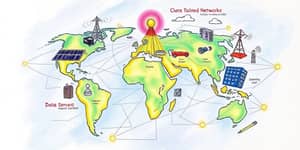
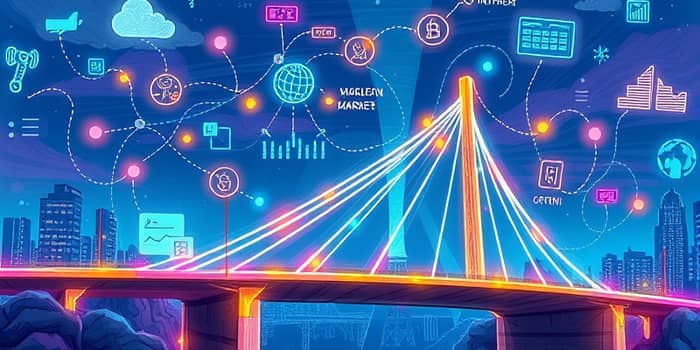
Blockchain oracles are entities that serve as crucial links, fetching real-world data like prices or weather events for smart contracts.
Without oracles, decentralized applications remain isolated, unable to respond to dynamic off-chain information.
This limitation stifles innovation and practical utility in sectors from finance to insurance.
By bridging this gap, oracles empower smart contracts to automate actions based on accurate, timely data.
Imagine a loan that adjusts interest rates automatically as market conditions shift, or a crop insurance policy that pays out instantly when drought sensors trigger.
Oracles make such scenarios a reality, turning abstract code into life-enhancing tools.
They solve the **oracle problem**, ensuring blockchains maintain security while accessing external sources.
What Are Blockchain Oracles?
At their essence, blockchain oracles are services that connect on-chain smart contracts to off-chain data systems.
They act as intermediaries, querying external APIs, databases, or sensors to provide verified information.
This enables smart contracts to execute based on real-world events, from stock prices to sports scores.
Oracles are vital because blockchains are inherently closed systems, designed for consensus and security.
Without them, applications would rely solely on internal data, missing out on real-time interactivity and accuracy.
The core components include an on-chain smart contract that listens for requests and an off-chain network that fetches and validates data.
This dual structure ensures that data is both accessible and trustworthy.
How Oracles Work: Bridging the Digital Divide
The process begins when a decentralized application needs external data to trigger a smart contract.
For example, a trading platform might require the latest cryptocurrency price to execute a buy order.
Oracles step in to retrieve this data from multiple sources, verify it through consensus, and format it for blockchain use.
This involves several key steps that ensure reliability and security.
- A dApp smart contract requests off-chain data, such as asset prices or weather conditions.
- The oracle network retrieves this data from external APIs or sensors, often using multiple nodes for verification.
- Data is aggregated and validated through mechanisms like cryptographic proofs or consensus algorithms.
- Once verified, it is delivered back to the on-chain contract, triggering automated execution.
- This seamless flow enables real-time responses, from automated trades to instant insurance payouts.
By emphasizing decentralization, oracles avoid single points of failure, making systems more resilient.
Diverse Types of Oracles: Tailoring Solutions
Oracles come in various forms to meet different needs, from simple data feeds to complex computations.
Understanding these types helps developers choose the right solution for their applications.
This diversity allows oracles to handle everything from static queries to dynamic, continuous data streams.
For instance, publish-subscribe oracles provide real-time feeds for monitoring, while immediate-read oracles offer on-demand data for one-off needs.
By leveraging these types, applications can achieve greater flexibility and efficiency in data handling.
Leading Oracle Projects: Innovations in Action
Several projects have emerged as leaders in the oracle space, each offering unique features and integrations.
These platforms drive innovation by providing secure, decentralized data solutions.
- Chainlink: The largest oracle network with a market cap over $1 billion, supporting numerous dApps and blockchains. It offers features like Chainlink VRF for verifiable randomness and Chainlink Automation for maintenance tasks.
- XYO Network: Focuses on geospatial data using decentralized devices, with components like Sentinels for data capture and proof-of-origin consensus.
- Tellor: A permissionless oracle that relies on a reporter network for querying and verification, providing spot and custom price feeds.
- RedStone: A modular oracle with off-chain storage for cost-effective, on-demand data, ideal for layer-2 protocols.
- Pyth Network: Specializes in financial data feeds, offering high-frequency updates for trading and lending platforms.
These projects highlight the ongoing evolution of oracle technology, enhancing security and scalability.
They enable developers to build more robust applications with trustless and accurate data.
Real-World Applications: Empowering Decentralized Systems
Oracles unlock a wide range of use cases by enabling smart contracts to interact with external data.
This transforms industries by automating processes and reducing reliance on intermediaries.
- Decentralized Finance (DeFi): Oracles provide real-time price feeds for trading, lending, and stablecoin pegs, ensuring accurate collateralization and market operations.
- Insurance: Parametric insurance uses weather or temperature data from oracles to automate claim payouts based on predefined conditions.
- Gaming and NFTs: Verifiable randomness from oracles ensures fair outcomes in games and NFT distributions, enhancing user trust.
- Supply Chain: Hardware oracles track goods via sensors, providing real-time location and condition data for transparency.
- Prediction Markets: Software oracles fetch sports or event results to settle bets automatically, reducing fraud and delays.
These applications demonstrate how oracles integrate blockchain with everyday life, driving efficiency and innovation.
For example, in banking, oracles support CBDCs by updating prices and collateral data seamlessly.
By enabling hybrid smart contracts, oracles combine on-chain logic with off-chain data for more complex functionalities.
Overcoming Challenges: Building Trust and Scalability
Despite their benefits, oracles face challenges that require careful design and implementation.
Addressing these issues is key to ensuring reliable and scalable oracle networks.
- Security Risks: Single oracles can be points of failure or manipulation, but decentralized oracle networks mitigate this through consensus and multiple data sources.
- Scalability Concerns: Contract-specific oracles are costly for large-scale use; publish-subscribe models offer more efficient solutions for dynamic data.
- Verification Complexity: Ensuring data accuracy requires cryptographic proofs or bound witness mechanisms, which can add computational overhead.
- Cost Management: Fetching and verifying data incurs expenses, but innovations like off-chain storage help reduce costs for users.
- Interoperability Needs: As blockchains proliferate, cross-chain oracles become essential for seamless data transfer and collaboration.
By focusing on decentralization and verification, oracles enhance the security and efficiency of decentralized applications.
They are critical for the verifiable web and interoperability, paving the way for a more connected digital future.
Conclusion: The Future with Oracles
Blockchain oracles are more than just technical tools; they are enablers of a new era where decentralized systems interact seamlessly with the real world.
By providing access to external data, they unlock the full potential of smart contracts, from automating finances to securing supply chains.
As technology evolves, oracles will continue to drive innovation, making blockchains more practical and impactful.
Embracing these bridges can help developers and users alike build a more transparent, efficient, and trusted digital ecosystem.
The journey ahead involves refining security, scalability, and usability to ensure oracles remain robust and accessible.
With ongoing advancements, the role of oracles in blockchain technology will only grow, transforming how we live and work.
References
- https://www.kraken.com/learn/blockchain-oracles
- https://101blockchains.com/top-blockchain-oracles/
- https://www.geeksforgeeks.org/computer-networks/blockchain-oracle-types-uses-and-how-it-works/
- https://en.wikipedia.org/wiki/Blockchain_oracle
- https://stellar.org/learn/smart-contract-basics-oracles
- https://www.apptunix.com/blog/blockchain-oracles-types-uses-and-working/
- https://chain.link/education/blockchain-oracles
- https://kanga.exchange/university/en/courses/advanced-course/lessons/42-top-10-blockchain-oracles-how-do-they-work-how-do-they-differ/
- https://www.osl.com/hk-en/academy/article/what-are-blockchain-oracles-and-why-do-we-need-them
- https://orochi.network/blog/what-are-oracles-types-of-blockchain-oracles
- https://www.coinbase.com/learn/crypto-glossary/what-is-a-blockchain-oracle-in-crypto
- https://supra.com/academy/what-are-oracles/
- https://www.oracle.com/blockchain/what-is-blockchain/