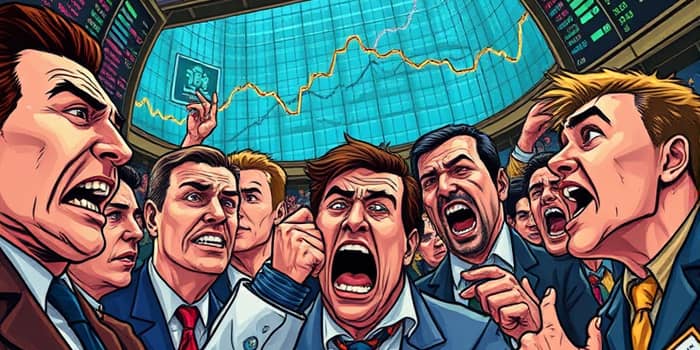
Markets have always been shaped not just by numbers, but by the human mind. When fear and uncertainty collide, they can trigger a cascade of reactions that far exceed the scale of any underlying economic shift.
Understanding these emotional surges is key to mastering volatility and safeguarding long-term wealth.
What Is Panic Selling?
Panic selling refers to the rapid, fear-driven liquidation of assets during sharp market downturns. It often manifests as investors dumping more than 80% of their equity holdings in a matter of days or even hours, exacerbating price plunges.
This phenomenon contrasts starkly with greed-driven buying in bubbles, creating a pendulum of extreme emotions that distort valuation.
Rather than a rational decision based on fundamentals, panic selling is a self-fulfilling cycle of panic that deters re-entry and alters portfolios for years.
Psychological Drivers Behind Panics
At the heart of market extremes lie cognitive biases and emotional impulses. Under stress, investors abandon analysis and succumb to instinctive reactions that prioritize safety over opportunity.
Below is a summary of major biases that fuel panic selling:
Historical Case Studies
History offers vivid examples of how these biases combine to create turmoil. Three landmark events illustrate the destructive power of collective panic:
- 2008 Financial Crisis: A domino effect of mortgage defaults triggered a 57% drop in the S&P 500 from peak to trough, only to rebound more than 400% over the next decade.
- Dot-Com Bubble Burst (2000): Euphoria gave way to fear as technology stock valuations collapsed, wiping out billions in market capitalization.
- East Asian Financial Crisis (1997): What began as localized currency concerns morphed into region-wide panic, fueled by media sensationalism and cross-border contagion.
These events show how rational signals are often overwhelmed by emotional risk perceptions trigger sell-offs that become unstoppable.
Empirical Insights from Research
Academic studies reinforce these observations. Research employing Japanese investor data reveals that overconfident individuals are significantly more likely to engage in panic selling, even when they possess high financial literacy.
- Overconfidence amplifies trading frequency and cost, reducing long-term returns.
- High literacy lowers panic risk, but only when not undermined by miscalibration.
- Information overload in urban and employed investors correlates with greater sell-offs.
These findings underscore the paradox that more knowledge does not always equate to better outcomes when emotion hijacks judgment.
Mitigation Strategies for Investors
While biases are deeply ingrained, there are practical steps to build resilience and foster rational decision-making under pressure:
- Develop a long-term plan with clear rules for rebalancing rather than reactive selling.
- Seek professional advice or use automated tools to discipline trades.
- Educate yourself continuously to recognize and counteract overconfidence.
- Keep perspective by studying historical recoveries and market cycles.
By anchoring to long-term horizons and embracing data over headlines, investors can break the cycle of panic and seize opportunities even in downturns.
Conclusion: Building Market Resilience
Emotional reactions need not dictate financial destiny. By understanding how biases like overconfidence and loss aversion drive mass liquidations, investors can transform fear into informed action.
This journey from panic to poise demands self-awareness, education, and a commitment to process over impulse. Ultimately, those who learn to ride out the storm emerge stronger and better positioned for the next market wave.
References
- https://pmc.ncbi.nlm.nih.gov/articles/PMC11927890/
- https://verusfinancial.ca/blog/the-psychology-of-market-declines-how-to-stay-rational-amid-the-chaos/
- https://www.humaninvesting.com/450-journal/psychology-of-market-patience
- https://www.bridgehousecanada.com/knowledge-center/lazard-asset-management-the-history-and-psychology-of-panic-selling/wppa_open/
- https://www.psychologytoday.com/us/blog/common-sense-science/202503/the-psychology-of-the-stock-market