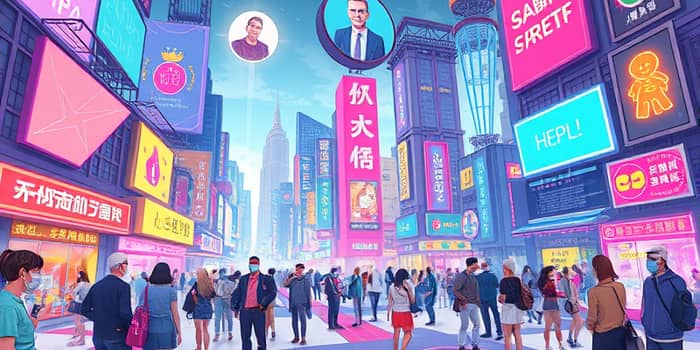
As digital frontiers expand, the metaverse economy is emerging as a transformative force that reshapes how individuals and businesses create, trade, and interact within virtual realms. This new digital dimension merges social experiences with economic transactions, unlocking unprecedented opportunities across industries and redefining value exchange in the twenty-first century.
Market Growth and Projections
The rapid evolution of immersive technologies, combined with growing consumer enthusiasm, has fueled remarkable expansion in the metaverse market. Valuations soared from between 82 and 95 billion dollars in 2023 to an estimated 105.4 billion dollars in 2024. By 2025, the market is projected to reach 155.35 billion dollars, reflecting accelerating investment and user participation. Analysts forecast a compound annual growth rate of 46.4 percent from 2025 to 2030, with market sizes between 936.6 billion and one trillion dollars by the end of the decade. Extended outlooks predict 1.3 trillion dollars in 2032 and over 7.17 trillion dollars by 2035, illustrating the profound impact of immersive digital consumer experiences on global commerce.
Dominant Virtual Asset Types
At the heart of this burgeoning economy lie a diverse array of virtual assets that confer utility, status, and creative potential. By 2030, several asset categories are expected to account for the majority of transactional volume and user engagement:
- Virtual Real Estate: Digital land parcels on leading platforms command premium prices as prime locations for social hubs, storefronts, and event venues.
- Avatars and Digital Wearables: Users express identity and status through personalized avatars, outfitted with high-end fashion items and exclusive cosmetics.
- Tokenized Collectibles: Scarcity and provenance drive value in limited-edition artworks, in-game items, and trading cards authenticated on blockchain networks.
- AI-Generated Assets: Tools that automatically craft tailored virtual goods, environments, and NPCs based on individual preferences and behavior.
- Currency and Payment Tokens: Native cryptocurrencies and stablecoins facilitate seamless cross-platform asset transfers and in-world commerce.
- Intellectual Property NFTs: Creators monetize work through programmable tokens that ensure royalty payments and verifiable ownership.
Technological Foundations Driving Growth
Several key innovations underpin the rapid maturation of virtual economies. Continuous breakthroughs in these domains will determine the pace and scale of metaverse adoption:
- Extended Reality Hardware: Lighter, more ergonomic headsets with higher resolution displays and wider fields of view enhance comfort and accessibility.
- Blockchain Scalability: Layer 2 solutions and new consensus mechanisms address transaction throughput, reducing fees and confirmation times.
- 5G and 6G Communications: ultra-low latency connectivity for real-time interactions enables large-scale synchronous experiences without lag.
- Spatial Computing: Integration of real-world data into digital twins creates dynamic, context-aware virtual environments.
- AI Integration: Procedural generation and intelligent NPCs automate content creation and deliver personalized adaptive user experiences at scale.
Infrastructure of the Virtual Economy
To sustain robust economic activity, the metaverse relies on interoperable systems that facilitate secure transactions and vibrant marketplaces. Digital currencies and non-fungible tokens serve as the foundational tools for value exchange, while specialized platforms cater to diverse commercial needs. Below is an overview of the primary marketplace types supporting virtual commerce:
Monetization Models and Revenue Strategies
Innovative pricing and revenue frameworks have emerged to capture value from metaverse participation. Leading models include:
- Subscription Access: Users pay recurring fees for entry to premium virtual realms, exclusive content, and community perks.
- Pay-to-Own and Rent-to-Own: Flexible schemes allowing trial periods before full acquisition of high-value digital assets.
- In-World Transactions: Cosmetic upgrades, consumables, and event tickets purchased directly within immersive platforms.
- Live Events and Experiences: Concerts, conferences, and art exhibits that generate income through virtual tickets and merchandise.
Applications Across Industries
As metaverse capabilities advance, numerous sectors are integrating virtual economies into their core operations. Retail companies are experimenting with personalized immersive shopping experiences, enabling customers to browse digital storefronts, interact with virtual sales assistants, and preview products in three-dimensional display rooms that mirror real-world textures and lighting conditions.
In gaming and entertainment, real-time verification of asset ownership and cross-platform compatibility empower players to earn tangible rewards through competitive play and user-generated content. Leading titles have hosted virtual concerts and fan meetups that sold out arenas, demonstrating the potential for multi-million dollar ticket sales in digital arenas.
Financial institutions are embedding lending, wealth management, and payment services within virtual environments. Token-backed loan products and asset-backed financing allow holders to leverage digital holdings as collateral, fostering new markets for institutional and retail investors alike.
For enterprises, immersive training modules reduce onboarding costs and accelerate skill acquisition, while virtual collaboration suites offer global teams the ability to co-design products and iterate prototypes in shared digital workshops. These solutions deliver measurable enhancements in productivity and employee engagement.
Investment Opportunities and Regulatory Landscape
Early movers can capitalize on the metaverse’s exponential growth by targeting four primary arenas: strategic acquisition of virtual real estate in high-traffic zones; early adoption of platform-native tokens; development of creator economy infrastructure such as marketplace tooling; and enterprise solution providers that address immersive workflow requirements.
Meanwhile, regulatory frameworks are evolving to manage taxation of virtual transactions, ensure consumer protection, and clarify intellectual property benchmarks. Policymakers are drafting guidelines to govern digital asset taxation, anti-fraud measures, and creator rights, balancing innovation incentives with financial stability mandates.
Looking Ahead: The Future Economic Landscape
By 2030, the metaverse economy will not replace but rather coexist and interlink with physical markets, offering hybrid experiences that span both domains. Consumers and businesses will navigate a continuum of digital-physical interactions, unlocking unprecedented creator monetization opportunities and forging entirely new economic paradigms.
As infrastructure matures, billions of users will engage daily with virtual worlds for social, educational, and commercial activities, generating trillions in economic value. The convergence of immersive technology, decentralized finance, and creative entrepreneurship promises a future where digital assets and real-world prosperity reinforce each other.
Embracing the metaverse economy today means positioning for the defining digital revolution of our era, where the boundaries between virtual and real economies blur and human imagination sets the limits for what is possible.
References
- https://www.timesofblockchain.com/price-prediction/metaverse-economy-forecast-2026-2030/
- https://advanceworks.ai/the-economic-potential-of-metaverse/
- https://www.sganalytics.com/blog/shopping-playing-or-working-how-will-you-be-spending-your-time-in-the-metaverse-in-2026/
- https://www.weforum.org/stories/2022/03/hour-a-day-in-metaverse-by-2026-says-gartner/
- https://www.startus-insights.com/innovators-guide/metaverse-outlook/
- https://www.novaoneadvisor.com/report/metaverse-market
- https://www.datainsightsmarket.com/reports/metaverse-interactive-experience-1499037