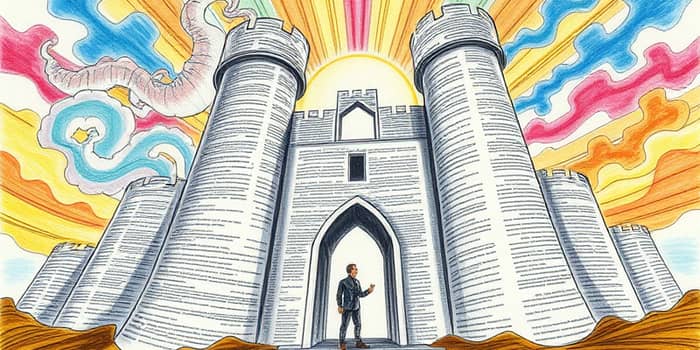
Borrowing money can fuel dreams, but the smallest text in your loan agreement may conceal the greatest risks. Those paragraphs written in minuscule font often dictate your rights, payments, and recourse in ways you never imagined. Building your financial future requires more than signing on the dotted line—it demands scrutiny.
Like a well-defended castle, your loan agreement must be fortified. By decoding every clause and understanding potential pitfalls, you can transform confusion into confidence and avoid the shock of unexpected costs or disputes.
Understanding the Hidden Risks
Fine print is more than an afterthought—it controls how notices are delivered, fees are assessed, defaults are handled, and rights may be waived. Hidden terms can drastically alter your obligations from funding through payoff or default. Overlooking them is akin to navigating uncharted territory without a map.
When you disregard these passages, you risk unexpected costs and disputes, from origination fees to aggressive collateral recovery. The stakes grow higher when businesses, families, or entire communities depend on that capital.
Key Clauses to Scrutinize
Not all contract language is created equal. Certain clauses invite serious consequences if left unchecked. Below are the critical sections every borrower should examine carefully.
Notice Provisions: Notices trigger major changes or default. Look for precise methods—certified mail with return receipt, overnight courier, or approved electronic portals—and require current physical and email addresses for all parties. Failure to update these can render notices unenforceable.
Interest Rates and Costs: Determine whether rates are fixed or variable, and verify how often adjustments can occur. Scan for hidden fees—origination, administrative, late-payment penalties, and prepayment charges—that can significantly increase borrowing cost. Compare the APR or APY to market norms; if it seems too low, it may hide surcharges.
Default and Consequences: Understand what constitutes default—missed payments, covenant breaches, or missing financial filings—and how much time you have to cure a breach. Secured loans allow collateral seizure, while unsecured debt can lead to lawsuits, collections, or wage garnishment. Some agreements permit lenders to impose new fees unilaterally.
Dispute Resolution and Waivers: Mandatory arbitration clauses can strip away your right to sue or join class actions, often favoring lenders. Be wary of broad liability waivers and restrictions on bankruptcy or error resolution, which may violate consumer protection laws and be unenforceable.
Personal Guarantees and Co-Signers: Personal guarantees put your home, savings, or other assets on the line. Co-signers share full liability. If circumstances change, both borrower and co-signer can face sudden default consequences.
Security, Representations, and Miscellaneous: Collateral descriptions must be precise, referencing correct UCC categories and perfection processes. Representations and warranties affirm your financial status and compliance. Check governing law, venue, amendment procedures, and clauses shifting legal costs to you.
Real-Life Examples and Lessons
Consider a small business owner who secured a $100,000 loan to expand operations. The headline rate seemed reasonable, but hidden prepayment penalties and administrative fees triggered a $15,000 surcharge when an early payoff occurred, undermining the expected savings.
The Consumer Financial Protection Bureau has enforced actions against lenders who deceptively include waivers of rights that cannot be legally waived. One mortgage provider inserted an “error resolution” waiver, only to have regulators void that clause and impose hefty fines.
In auto financing, borrowers have challenged clauses that strip away bankruptcy protections. Courts often find such provisions unenforceable, but only after costly litigation. These examples underscore why thorough review up front is critical to avoid financial traps.
Regulatory Protections and Your Rights
Federal and state laws offer a line of defense against deceptive fine print. The Consumer Financial Protection Act bars provisions that unfairly limit consumer rights, even if presented in standard form documents. Truth in Lending Act rules can invalidate mandatory arbitration in certain mortgage agreements.
The Military Lending Act shields active-duty service members from abusive terms, including hidden fees and unlawful waivers. When lenders cross legal lines, regulators can void offending clauses and impose penalties.
Understanding these protections empowers you to challenge illegal fine print and negotiate more favorable terms. Keep a copy of applicable statutes handy or consult a consumer law resource when in doubt.
Strategies to Build Your Own Fortress
Arming yourself with a systematic approach transforms the overwhelming task of reviewing a loan agreement into a manageable process. Adopt these strategies to ensure no clause catches you off guard.
- Read Thoroughly: Don’t skip any section, especially the miscellaneous and schedule attachments.
- Ask Questions: Request plain-English explanations and push back on vague or sweeping provisions.
- Seek Expertise: For significant loans, enlist a knowledgeable attorney or financial advisor.
- Verify Contact Details: Ensure all notice addresses and emails are current.
- Negotiate Terms: Remove or limit harmful clauses where possible.
Use a pre-sign checklist to capture every concern:
Taking Action Today
Your next loan agreement doesn’t have to be an enigma. With vigilance and the right tools, you can transform every fine-print fortress into a transparent roadmap. Start by reading one agreement end to end, highlighting any unexpected fees or broad waivers.
Then, reach out to the lender for clarification or propose amendments. If you encounter resistance, leverage regulatory protections or professional guidance to uphold your rights. Every clause you negotiate strengthens your position for future borrowing.
Ultimately, protecting yourself in loan agreements is not just about guarding against loss—it’s about empowering your financial journey. By building your own fortress of knowledge, you ensure that each borrowing decision supports your goals, rather than undermining them.
References
- https://noteservicingcenter.com/the-notice-provision-unpacking-the-critical-fine-print-of-your-loan-agreement/
- https://onemoneyway.com/en/dictionary/the-fine-print/
- https://www.jgwentworth.com/resources/mp-how-to-read-the-fine-print-on-loan-offers
- https://www.crestmontcapital.com/blog/the-importance-of-reading-your-loan-contract-thoroughly
- https://www.consumerfinance.gov/about-us/newsroom/cfpb-warns-against-deception-in-contract-fine-print/
- https://www.business.com/articles/do-understand-the-fine-print-of-your-loan-agreement/
- https://www.fredlaw.com/alert-demystifying-the-loan-agreement-a-guide-for-lenders
- https://www.experian.com/blogs/ask-experian/read-the-fine-print-before-getting-large-loan/
- https://www.thimble.com/blog/business-loan-agreements-everything-you-need-to-know
- https://afro.com/fine-print-fright-a-guide-to-understanding-financial-terms/