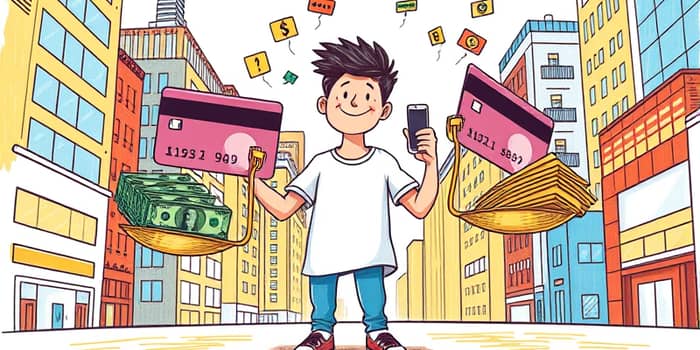
Understanding how to wield credit cards responsibly has never been more important. With debt levels soaring, consumers must become savvy, conscientious users.
Current Credit Card Landscape
By Q4 2025, total U.S. credit card balances reached $1.277 trillion, marking the highest since tracking began in 1999. This represents a 3.6% rise from Q3 2025 and a dramatic 66% surge since early 2021. Experts project a modest increase to $1.18 trillion by the end of 2026, the smallest annual uptick in over a decade.
The national average debt among cardholders with unpaid balances stands at $7,886 in Q3 2025. Digital channels dominate spending habits: 69% of purchases occur online, with mobile devices accounting for 32% of those transactions. While affluent consumers sustain growth, lower-income segments have begun to pull back, foreshadowing widening economic divides.
Risks of Irresponsible Use
High interest rates and revolving debt can trigger debt spirals for everyday essentials. The national delinquency rate for accounts 90+ days past due hovers at 2.57%, up just one basis point, but holiday season spikes often push consumers into precarious territory.
Global fraud losses are expected to reach $43 billion by 2026. In an environment where over 80% of holiday shoppers lean on credit, the risk of identity theft and unauthorized charges is significant. Vigilance and timely action are critical.
Principles of Responsible Consumption
Ethical spending begins with clear rules of engagement. Follow these guiding principles:
- Pay balances in full every month to avoid high interest debt spirals.
- Use rewards without carrying revolving balances, ensuring net benefits.
- Select issuers committed to fair practices and transparent fees.
- Monitor for fraud in digital environments with real-time alerts.
Adhering to these habits builds creditworthiness and fosters financial resilience, even amid economic uncertainty.
State-Level Debt Variations
Regional disparities highlight how context affects consumer behavior. In Q3 2025, average credit card balances ranged dramatically across states:
States in the Northeast lead in average balances, while certain Southern states report significantly lower figures, reflecting cost-of-living and income differences.
Ethical Card Options and Comparisons
Not all credit cards are created equal. Some issuers prioritize shareholder returns over consumer well-being, raising limits or charging premium rates without consent. Look for cards that:
- Are issued by mutual-owned institutions or cooperatives.
- Offer clear, straightforward fee structures.
- Provide purchase protection and customer-centric policies.
For global inspiration, UK examples include cooperative-issued cards with fee-free periods and cashback options. Seek similar ethical commitments in your local market.
Trends Shaping Credit in 2026
A spending disconnect despite sour consumer mood defines the post-pandemic landscape. Credit balances remain above pre-2020 levels, driven by inflation and reliance on revolving credit.
Demographic shifts are also at play. The top 3.3% income bracket fuels transaction growth, while the bottom 80% sees stagnation. Gen Z is emerging as a key consumer group, demanding intuitive digital features and sustainability-linked rewards.
Technological advances, including AI-driven analytics and crypto integrations, are transforming reward structures and fraud prevention. Lenders are tightening underwriting standards, moderating balance growth and favoring borrowers with demonstrated responsibility.
Actionable Advice
Transform insight into practice with targeted strategies:
- Create a rolling budget that allocates funds for monthly credit card payments.
- Set up automated payments to pay balances fully each cycle and avoid late fees.
- Enable transaction alerts to catch unauthorized charges immediately.
- Review monthly statements for anomalies and adjust spending behavior accordingly.
By combining discipline with the right tools, you can harness credit cards as instruments of empowerment rather than liability.
Conclusion
Credit cards are potent financial tools when wielded ethically and responsibly. By understanding the landscape, recognizing risks, and adhering to principled habits, you become an ethical consumer in control of your financial destiny. Embrace diligence, choose fair issuers, and let your spending reflect both wisdom and integrity.
References
- https://use.expensify.com/blog/credit-card-statistics
- https://www.lendingtree.com/credit-cards/study/credit-card-debt-statistics/
- https://newsroom.transunion.com/2026-consumer-credit-forecast/
- https://www.emarketer.com/content/us-consumer-payment-method-trends-2026
- https://good-with-money.com/2026/02/12/top-3-ethical-credit-cards/
- https://institute.bankofamerica.com/economic-insights/consumer-checkpoint-december-2025.html
- https://www.thisweekinfintech.com/consumer-credit-cards-in-2026/
- https://dbrs.morningstar.com/research/471267/2026-us-credit-card-sector-outlook-another-year-of-disconnect-between-consumers-sour-mood-and-spending-habits
- https://kpmg.com/us/en/articles/2025/august-2025-consumer-credit-outstanding.html
- https://www.cpapracticeadvisor.com/2026/02/12/5-credit-card-trends-to-watch-for-in-2026/178009/
- https://www.deloitte.com/us/en/insights/industry/financial-services/financial-services-industry-outlooks/banking-industry-outlook.html