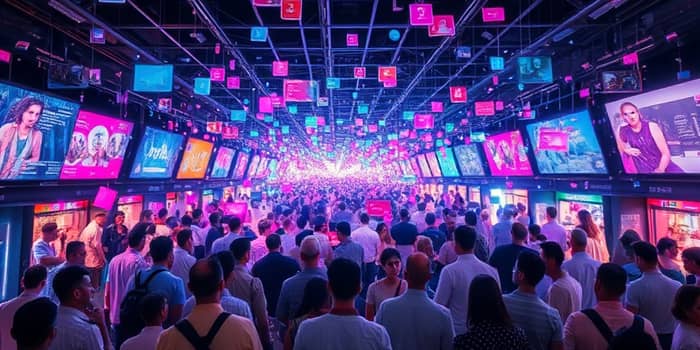
In an age defined by instantaneous sharing and personalized algorithms, the term "echo chamber" has become a critical lens for understanding how information circulates in markets and societies. Far beyond a simple metaphor, the echo chamber effect shapes the decisions of consumers, influences corporate strategies, and fractures public discourse.
As digital platforms tailor content to individual preferences, users encounter streams of information that mirror their existing views. This phenomenon can be reinforced through repeated exposure, making alternative perspectives increasingly rare and distant.
Understanding the Echo Chamber Effect
An echo chamber occurs when individuals or groups receive information predominantly from like-minded sources, creating a feedback loop that amplifies shared beliefs. In e-commerce, for instance, recommendation engines display similar products based on past behavior, reinforcing shopping patterns over time.
This tendency isn’t driven solely by technology. Human biases—such as the tendency to seek confirming evidence—amplify the effect. When algorithms and human psychology converge, they produce a deeply polarized information landscape that can isolate users from dissenting viewpoints.
Core Mechanisms Driving Echo Chambers
Several factors combine to create and sustain echo chambers in modern markets and media:
- Algorithmic curation: Platforms serve content tailored to perceived interests, prioritizing engagement over diversity.
- Social validation loops: Users receive feedback primarily from peers who share similar views, reinforcing existing opinions.
- Content recycling: News and commentary are recycled across outlets that reference each other, lending mutual legitimacy.
These mechanisms work together to magnify messages within bounded spaces while filtering out external perspectives, a process strengthened by highly algorithmically selected content that prioritizes retention over exploration.
Echo Chambers Versus Filter Bubbles
Though often conflated, echo chambers and filter bubbles are distinct. An echo chamber emphasizes the reinforcement and polarization of ideas, while a filter bubble focuses on the narrowing of exposed content.
Manifestations Across Sectors
Echo chambers appear in diverse contexts, shaping behaviors and decisions across industries.
In e-commerce, platforms like Alibaba Taobao analyze click and purchase patterns to cluster users into interest groups. Over time, buyers see more of the same categories, reducing opportunities for discovery.
News media outlets reinforce stories by cross-referencing content, while social platforms encourage sharing aligned viewpoints. Corporate boardrooms can also fall prey, as executives unconsciously dismiss external intelligence in favor of internal consensus.
Psychological Underpinnings
Human cognition plays a central role. Two related phenomena heighten the echo chamber effect:
- Confirmation bias: Individuals seek and favor information that supports their beliefs.
- False consensus bias: People overestimate how widely their opinions are shared, reinforcing the illusion of majority support.
These biases interact with technology to create self-reinforcing cycles of belief, making it challenging to break out of insulated information spaces without conscious effort.
Societal and Organizational Impacts
On a macro level, echo chambers fragment public discourse around critical issues like climate change, public health, and social justice. When groups inhabit isolated information spheres, shared understanding dissolves, undermining collective problem-solving.
Within organizations, the absence of diverse viewpoints can lead to strategic blind spots. Executives may base projections on internal consensus rather than market realities, risking overoptimism and misallocation of resources.
Strategies to Break Free from Echo Chambers
Confronting echo chambers requires deliberate practices that introduce new perspectives and challenge comfort zones. Key approaches include:
- Adopting an outside view in strategic planning by incorporating dispassionate forecasts that benchmark against broader market trends.
- Encouraging teams to systematically incorporate external perspectives, inviting third-party analysis and scenario planning.
- Rotating media sources and diversifying information feeds to counteract algorithmic narrowcasting.
In practice, these steps involve both cultural change and technological tools. Companies can establish central data offices to provide end-market analyses to all business units, ensuring that external variables inform every decision.
Practical Steps for Individuals
Readers can apply similar principles in their personal and professional lives.
First, curate a balanced information diet: subscribe to newsletters outside your usual interests, follow diverse thought leaders, and use platform settings to explore new topics. Second, engage in conversations with people holding different viewpoints, practicing active listening and respectful debate.
Finally, reflect on your own sharing behavior. Before reposting, ask whether the content challenges your perspective or merely reinforces it.
A Call to Collective Action
In a world defined by rapid information flow, navigating echo chambers is not optional—it is essential for thriving in modern markets and democratic societies. By recognizing the forces at play and adopting structured approaches to diversify inputs, individuals and organizations can foster more resilient decision-making.
As you proceed, remember that meaningful dialogue begins with the willingness to listen and learn. Only by stepping outside our comfort zones can we build bridges across divides and harness the full potential of global connectivity.
References
- https://arxiv.org/pdf/2007.02474
- https://www.mckinsey.com/capabilities/strategy-and-corporate-finance/our-insights/are-your-strategy-discussions-stuck-in-an-echo-chamber
- https://www.ebsco.com/research-starters/communication-and-mass-media/echo-chamber-effect
- https://sk.sagepub.com/ency/edvol/embed/encyclopedia-of-social-media-and-politics/chpt/echo-chamber-phenomenon
- https://thedecisionlab.com/reference-guide/psychology/echo-chamber
- http://reutersinstitute.politics.ox.ac.uk/echo-chambers-filter-bubbles-and-polarisation-literature-review