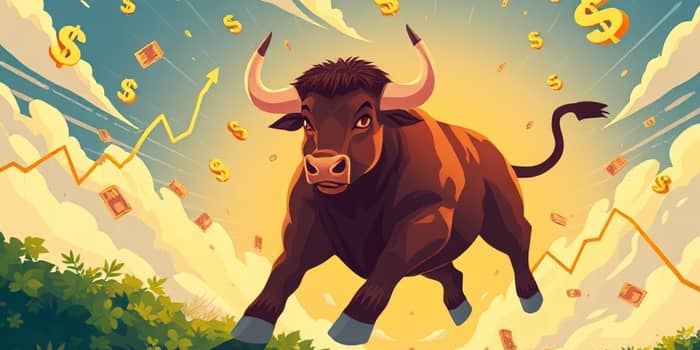
Imagine a financial landscape where optimism fuels growth, and every investor feels the pulse of opportunity. A bull market is not just a statistical anomaly; it's a powerful force that defines economies and transforms lives.
At its core, a bull run is marked by a 20% or more increase in broad market indices from recent lows, lasting for months or even years. This sustained rise breathes life into portfolios and ignites hope in the hearts of many.
Historically, these periods have been characterized by rising asset prices that climb steadily, driven by collective confidence and economic strength. Understanding this phenomenon is key to navigating the waves of market dynamics.
Defining the Bull Market
A bull market is formally recognized when key benchmarks, like the S&P 500, surge by at least 20% from their previous lows. This threshold is not arbitrary; it signifies a meaningful shift in market sentiment and performance.
Technical analysts often confirm this trend with signals such as the golden cross, where the 50-day moving average rises above the 200-day moving average. This indicator helps investors spot early signs of momentum.
In contrast, a bear market represents the opposite: a decline of 20% or more, often accompanied by pessimism and caution. Recognizing these patterns can empower you to make informed decisions.
- Bull markets apply to various assets, including stocks, real estate, and commodities.
- They are confirmed retrospectively after meeting the 20% increase threshold.
- The duration typically spans at least two months, but can extend for years.
Historical Echoes and Statistics
Since 1928, the S&P 500 has experienced 27 bull markets, each averaging a gain of 115% over 2.7 years. This historical data reveals the resilience and potential of market uptrends.
Bull markets last nearly twice as long as bear markets, with gains that often outweigh losses significantly. For instance, the dot-com bull of the late 1990s saw the Nasdaq surge by over 4,000 points.
These periods are not just numbers; they reflect cycles of innovation and growth. By studying past trends, investors can better anticipate future opportunities.
Phases of a Bull Run
A bull market typically evolves through distinct phases, each marked by changing investor behavior and economic indicators. Recognizing these stages can help you stay ahead of the curve.
The journey begins with recovery from a bear market low, where prices start to climb as confidence slowly rebuilds. This phase often sees cautious optimism turning into steady growth.
As the market gains traction, speculation accelerates, leading to peaks that may precede a reversal. Understanding this progression is crucial for timing investments wisely.
- Phase 1: Recovery from recent lows, with initial price increases.
- Phase 2: Steady climb driven by improving economic data and sentiment.
- Phase 3: Acceleration fueled by speculation and heightened demand.
- Phase 4: Peak and potential reversal, often signaled by technical downturns.
Economic Drivers Behind the Rise
Bull markets often coincide with robust economic conditions, such as strong GDP growth and falling unemployment rates. These factors create a fertile ground for market expansion.
Corporate earnings tend to rise during these periods, boosting stock prices and reinforcing investor confidence. This cycle of growth can become self-sustaining, driven by optimism and increased spending.
In recent times, phenomena like AI-driven capital expenditures have concentrated growth in specific sectors, highlighting that market performance doesn't always mirror the broader economy perfectly.
- Key drivers include rising consumer spending and moderate inflation.
- Technical indicators, such as bullish signals in bonds and equities, support the uptrend.
- Low recession risk and neutral inflation contribute to a stable environment.
Navigating the Bull: Strategies for Investors
To thrive in a bull market, embrace momentum trading and focus on long-term holdings. These strategies allow you to capitalize on upward trends while managing risks effectively.
Investor behavior often follows an optimism cycle, where buying leads to higher demand and prices, which in turn encourages more buying. Staying disciplined and avoiding overconfidence is essential to prevent bubbles.
Wealth creation is possible at any entry point if the trend holds, making it vital to stay invested through volatility. Remember, bull markets are common and offer significant opportunities for growth.
- Maintain a focus on fundamentals rather than speculative frenzy.
- Use technical analysis to identify entry and exit points.
- Diversify portfolios to mitigate risks during market fluctuations.
Bull vs. Bear: A Comparative Glance
Understanding the differences between bull and bear markets can enhance your investment approach. Bull markets are defined by sustained rises, while bear markets involve prolonged declines.
Sentiment in a bull run is marked by optimism and confidence, driving behaviors like FOMO buying and increased IPO activity. In contrast, bear markets foster pessimism and selling cycles.
Economically, bull markets align with growth and low unemployment, whereas bear markets often signal weakness and higher joblessness. These contrasts underscore the importance of adaptive strategies.
- Price movement: +20% rise vs. -20% fall from highs.
- Duration: Longer and stronger gains in bulls compared to shorter, weaker losses in bears.
- Technical signals: Golden cross in bulls vs. death cross in bears.
Conclusion: Riding the Wave
Bull markets are more than statistical events; they are narratives of human resilience and economic vitality. By grasping their anatomy, you can harness their power for personal and financial growth.
Stay informed, remain cautious of overvaluation, and let history guide your decisions. With the right mindset, you can navigate these cycles and emerge stronger, ready to seize the next opportunity.
References
- https://www.fe.training/free-resources/financial-markets/bull-market/
- https://www.fidelity.com/learning-center/smart-money/bear-vs-bull-market
- https://www.thecorporategovernanceinstitute.com/insights/lexicon/what-is-a-bull-market/
- https://www.cmgwealth.com/ri/trade-signals-bull-market-everything/
- https://www.investor.gov/introduction-investing/investing-basics/glossary/bull-market
- https://www.mnclgroup.com/what-is-a-bull-market-meaning-indicators-investment-strategies
- https://www.scotiabank.com/ca/en/personal/advice-plus/features/posts.bear-vs-bull-market-the-basics.html
- https://www.cmegroup.com/openmarkets/economics/2025/Six-Questions-Defining-the-Bull-Market-Bear-Economy-Divide.html
- https://www.jpmorgan.com/videos/unpacked-explainer-videos/defining-bull-and-bear-markets
- https://www.hartfordfunds.com/practice-management/client-conversations/investing-for-growth/10-things-you-should-know-about-bull-markets.html
- https://www.fidelity.com/learning-center/smart-money/bull-market
- https://www.usbank.com/financialiq/invest-your-money/market-perspectives/bull-market-to-bear-market.html
- https://www.johnhancock.com/ideas-insights/bull-market-vs-bear-market.html
- https://public.com/learn/bull-markets
- https://www.bunq.com/en-us/blog/what-do-market-terms-like-bull-and-bear-mean