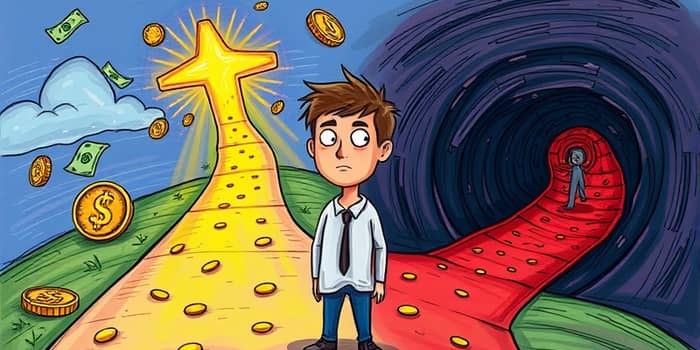
In today's fast-paced economy, financial emergencies can arise unexpectedly, leaving many in need of rapid solutions.
Short-term loans, often ranging from 6 to 36 months, offer speedy access to cash but come with interest rates that can be as high as 36% APR.
This article explores the delicate balance between their benefits and risks, empowering you to make informed decisions.
Defining Short-Term Loans
Short-term loans are unsecured personal loans designed for quick funding, typically used for urgent expenses like medical bills or car repairs.
They differ from payday loans, which have ultra-short terms and exorbitant rates, sometimes exceeding 300% APR.
- Loan amounts: Start as low as $600.
- Repayment periods: Usually 6 to 36 months.
- Interest rates: Average 8% to 36% APR.
- Security: No collateral required.
For borrowers with excellent credit, rates can drop to 6.74%, providing a relatively affordable option in tight situations.
Interest Rates and 2026 Forecasts
Post-COVID economic uncertainty has kept interest rates elevated, with personal loan averages projected around 12% APR for 2026.
This reflects lenders' risk-averse strategies in a volatile market.
Shopping around for lenders is crucial to minimize costs and find the best fit for your needs.
The Pros: Benefits of Short-Term Loans
Despite the costs, short-term loans have several appealing features that make them a go-to for many.
- Quick and easy access: Funding can be secured in days, often with minimal paperwork.
- Fixed monthly payments: Predictable installments aid in budgeting.
- Flexibility in amounts: Borrowers can take small sums, reducing overborrowing risk.
- No collateral needed: Assets are not at risk, unlike with secured loans.
- Better than payday loans: They serve as a safer alternative to predatory lending.
In emergencies, this provides immediate liquidity, preventing further financial crises.
The Cons: Risks and Drawbacks
However, the drawbacks are significant and can lead to long-term financial harm if not managed carefully.
- High interest costs: APRs averaging 12% or more can make loans expensive quickly.
- Risk of debt cycles: Short terms mean high monthly payments, which may be unaffordable.
- Credit score impact: Missed payments can damage credit, raising future borrowing costs.
- Targeting vulnerable groups: Subprime borrowers often face the highest rates.
- Potential for over-reliance: Easy access can encourage habitual borrowing.
This can result in persistent financial struggles, trapping individuals in a cycle of debt.
Consumer Credit Trends and Insights
Recent data shows a surge in short-term credit usage, highlighting evolving financial behaviors.
According to the Federal Reserve, nonrevolving credit, which includes personal loans, has grown substantially.
- 2025 Q3 flow: $138.8 billion.
- October 2025 flow: $188.7 billion.
- November 2025 flow: $12.1 billion annual rate.
- Total short-term debt: Estimated at $3.11 trillion in 2025.
- Loan originations: 6.9 million new loans in Q2 2025, a 26% year-over-year increase.
Fintech companies now hold a dominant 53% market share, indicating a shift towards digital solutions.
Practical Tips for Smart Borrowing
To use short-term loans wisely, follow these strategies to avoid common pitfalls.
- Evaluate your financial situation: Ensure you have a clear repayment plan.
- Compare offers: Use online tools to check rates from multiple lenders.
- Improve your credit score: Higher scores can secure lower interest rates.
- Read all terms carefully: Be aware of hidden fees or penalties.
- Consider alternatives: Explore options like savings or low-interest credit cards.
Tools like loan calculators can help estimate total costs accurately, aiding in better decision-making.
Comparing with Alternatives
It's essential to weigh short-term loans against other financial products to find the best option.
- Credit cards: Often have variable APRs, but 0% introductory offers can be cheaper.
- Personal loans: Longer terms (3-5 years) with similar rates, offering lower monthly payments.
- Savings accounts or CDs: Provide interest earnings instead of costs, requiring existing funds.
- Payday loans: Much riskier, with extremely high rates, best avoided.
This comparison underscores that short-term loans are not always the optimal choice.
Conclusion: Making Informed Choices
Short-term loans present a dichotomy: they can be a lifeline or a liability, depending on how they're used.
By staying informed and practicing responsible borrowing habits, you can navigate this financial tool effectively.
Remember, today's solution shouldn't become tomorrow's problem, so borrow with caution and foresight.
References
- https://www.bankrate.com/loans/personal-loans/personal-loan-rates-forecast/
- https://www.lendio.com/business-calculators/short-term-loan-calculator
- https://www.federalreserve.gov/releases/g19/current/
- https://www.lendingtree.com/personal/short-term-loans/
- https://www.morganstanley.com/im/en-us/individual-investor/insights/outlooks/private-credit-2026-outlook.html
- https://www.navyfederal.org/rates.html
- https://www.nerdwallet.com/business/loans/learn/rates-fees
- https://www.credible.com/personal-loan
- https://www.meridianlink.com/blog/2026-banking-and-lending-trends/
- https://www.bankrate.com/loans/personal-loans/rates/
- https://fred.stlouisfed.org/tags/series?t=loans%3Bshort-term
- https://www.wellsfargo.com/personal-loans/rates/
- https://britepayments.com/resources/article/consumer-lending-trends-2026/
- https://www.usbank.com/loans-credit-lines/personal-loans-and-lines-of-credit/personal-loan-calculator.html
- https://tradingeconomics.com/united-states/gross-ext-debt-pos--other-sectors-short-term-loans-usd-wb-data.html