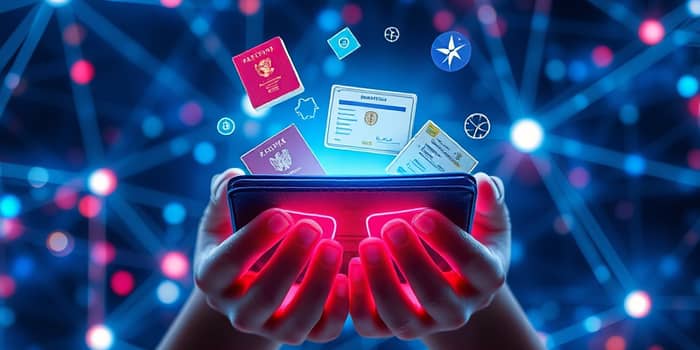
In a digital era where personal data is constantly collected, stored, and shared by corporations and governments, a transformative approach is emerging: complete ownership and privacy control. Self-sovereign identity (SSI) offers a model where individuals hold and manage their own digital credentials, deciding exactly what information to reveal and to whom. This article explores the principles, mechanics, real-world applications, and practical steps to begin using SSI today.
Understanding the Foundations of SSI
At its core, SSI empowers people with unparalleled privacy and security protections by eliminating central repositories of sensitive data. Instead of relying on large platforms or government databases, each person stores verifiable credentials securely in a digital wallet on their own device. They share only the specific attributes needed for a transaction or interaction, such as proof of age or professional qualifications.
The key principles guiding SSI include:
- Autonomy: Each user chooses what to share and with whom.
- Consent: Every data exchange requires explicit permission.
- Control: Users grant and revoke access to their identity data.
- Persistence: Credentials remain available as long as the user desires.
- Portability: Identities travel across systems like a physical wallet.
- Security: Sharing is secured through robust cryptography.
Core Technical Components
The SSI ecosystem relies on several interlocking technologies to function seamlessly and securely. Central to this model are Verifiable Credentials (tamper-proof digital documents), Decentralized Identifiers (unique user-generated IDs), and cryptographic proofs of authenticity.
When an institution such as a university or government issues a credential, it creates a tamper-proof digital document—the VC—signed by the issuer’s private key. The recipient stores this credential in a digital wallet. When verification is needed, the user generates a DID to establish a secure, peer-to-peer connection. The verifier can then confirm the signature against the issuer’s public key without collecting or storing any additional personal data.
- Claims: Assertions about identity facts (for example, “I have a valid driver’s license”).
- Proofs: Evidence supporting those claims, like a digital copy of a passport.
- Attestations: Third-party validations confirming the authenticity of the proofs.
Many SSI solutions leverage blockchains or distributed ledgers—such as Hyperledger Indy or Atala PRISM—to register DIDs and anchor credential schemas, ensuring immutability and transparency without exposing personal details.
Real-World Applications and Impact
Across the globe, governments, healthcare providers, educational institutions, and private enterprises are piloting and deploying SSI solutions that transform how we prove and use our identities. These practical examples demonstrate how SSI can streamline processes, reduce fraud, and enhance user privacy.
- Government Services: In British Columbia, businesses receive a single verifiable credential for tax IDs at municipal, provincial, and federal levels. Ethiopia’s national blockchain identity employs Atala PRISM to issue digital IDs to citizens, enabling seamless access to public services.
- Healthcare: Patients can consolidate vaccination records, insurance cards, and medical histories into their digital wallet for secure ePrescription fulfillment and hospital onboarding.
- Education: Universities issue diplomas and transcripts as VCs, allowing graduates to share verified credentials instantly with employers and licensing boards.
- Travel and Hospitality: Digital passports, visa credentials, and vaccination proofs accelerate airport security checks and hotel check-ins.
- Workforce Management: Employers verify academic and professional credentials, and grant facility access via digital employee badges.
Benefits That Matter to You
The transition to SSI brings tangible benefits for individuals, organizations, and society at large. By centering control in the hands of users, we unlock a multitude of advantages:
Overcoming Challenges and Getting Started
Despite its promise, SSI adoption faces hurdles such as user experience design, ecosystem fragmentation, and regulatory uncertainty. Organizations must carefully consider technology selection and governance frameworks to ensure successful deployment. Here are practical steps to begin your SSI journey:
- Choose a user-friendly digital wallet that supports industry standards like W3C VCs and DIDs.
- Engage trusted issuers—governments, universities, or certification bodies—to collaborate on credential formats and schemas.
- Pilot on a clearly defined use case with measurable objectives, such as age verification or employment onboarding.
- Educate stakeholders and end users on privacy safeguards and the benefits of decentralization.
- Evaluate compliance with local data regulations and establish procedures for credential revocation and recovery.
Embracing a Future of Digital Freedom
Self-sovereign identity is more than a technical framework; it is a movement toward a truly user-centric digital ecosystem. By reclaiming control over our personal data, we reduce reliance on centralized authorities, mitigate fraud, and foster trust in online interactions. As SSI technology matures and adoption grows, it will reshape industries, empower individuals, and uphold the fundamental right to privacy in our digital age.
Whether you are a developer, policymaker, or everyday user, now is the time to explore self-sovereign identity. Begin experimenting with digital wallets, participate in community networks, and contribute to the standards that will define the next generation of digital identity. Your data, your control—your sovereign digital future awaits.
References
- https://www.techtarget.com/searchsecurity/definition/self-sovereign-identity
- https://www.okta.com/en-au/identity-101/self-sovereign-identity/
- https://seon.io/resources/dictionary/self-sovereign-identity/
- https://gataca.io/resources/blog/ssi-essentials-35-use-cases-of-decentralized-identities-that-will-make-your-life-easier/
- https://www.1kosmos.com/resources/blog/self-sovereign-identity
- https://github.com/animo/awesome-self-sovereign-identity
- https://www.okta.com/identity-101/self-sovereign-identity/
- https://www.kaleido.io/blockchain-blog/identity-management-examples
- https://walt.id/white-paper/self-sovereign-identity-ssi
- https://identitymanagementinstitute.org/self-sovereign-identity/
- https://cpl.thalesgroup.com/blog/access-management/self-sovereign-identities-control-personal-data
- https://blogs.oracle.com/blockchain/privacyenhanced-verifiable-credentials
- https://www.dock.io/post/self-sovereign-identity
- https://cheqd.io/ssi/