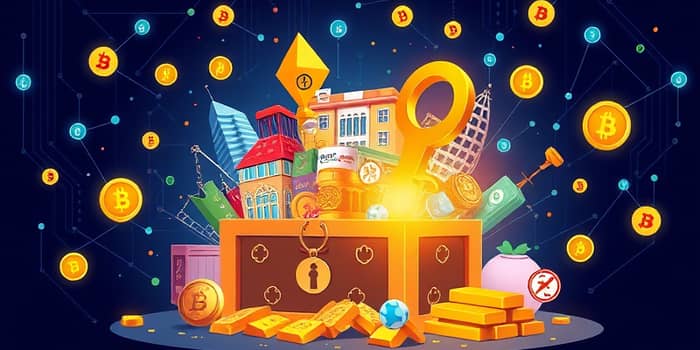
In the evolving world of finance, a new frontier is emerging that promises to democratize wealth and reshape investment landscapes.
Security tokens are at the heart of this transformation, blending traditional assets with cutting-edge blockchain technology.
These blockchain-based representations of real-world financial instruments offer a gateway to previously inaccessible markets, sparking excitement among investors and innovators alike.
What Are Security Tokens?
Security tokens are digital tokens issued on blockchains that represent ownership stakes in external assets or enterprises.
They function as digital wrappers around assets like stocks, bonds, real estate, and art, enabling fractional ownership and automated processes through smart contracts.
Unlike utility tokens, which provide access to services, security tokens denote direct ownership and must comply with securities regulations, making them a regulated investment vehicle.
Key features define their potential and appeal.
- Programmable compliance: Smart contracts embed rules for investor accreditation and transfer restrictions.
- Transparency and immutability: Blockchain records ensure all transactions are secure and verifiable, reducing fraud.
- Liquidity enhancements: They enable fractional trading of illiquid assets on global marketplaces, with automated settlement.
- Asset types: These include asset-backed tokens for real estate or art, equity tokens for shares, debt tokens, and hybrids.
This foundational understanding sets the stage for exploring their market dynamics and opportunities.
The Explosive Growth of the Security Token Market
The security token market is projected to experience rapid expansion, driven by increasing blockchain adoption and regulatory clarity.
Various reports highlight impressive growth figures, underscoring the sector's potential for investors.
This comparison clarifies why security tokens are gaining traction as a compliant and value-driven option.
Market projections vary but consistently point to significant growth.
- Worldwide reports estimate the market to reach USD 9.8 billion by 2032, with a CAGR of 33.5% from 2025.
- Other insights project USD 17.44 billion by 2033, driven by regulatory advancements and tech innovations.
- Broader tokenization markets could exceed $20 trillion, highlighting the immense scale of this shift.
Such figures signal a transformative era for global finance, inviting both caution and optimism from stakeholders.
Key Drivers Fueling Adoption
Several factors are accelerating the adoption of security tokens, making them more accessible and reliable.
Regulatory advancements in regions like the U.S. and Asia Pacific provide clearer frameworks, boosting investor confidence.
Institutional adoption by banks and broker-dealers is driving asset digitization, reducing settlement times and costs.
Technological enablers, such as distributed ledger technology, support immutable records and programmable features like dividends.
The pandemic has also played a role by accelerating digital demand, maintaining pre-COVID growth trajectories.
- Regulatory clarity from bodies like the SEC and FINRA in the U.S.
- Institutional interest in efficiency and compliance enhancements.
- Tech innovations including DeFi integration and smart contracts.
- Global digital transformation trends post-pandemic.
These drivers collectively create a fertile ground for security tokens to thrive and expand.
Market Segmentation and Regional Insights
The security token market is diverse, segmented by asset type and end-user, with regional variations in adoption and growth.
By asset type, equity tokens are the most attractive due to their liquidity potential, followed by debt and asset-backed tokens like those for real estate or art.
By end-user, financial institutions hold the largest share, leveraging security tokens for operational efficiency and product innovation.
Regionally, North America dominates with a mature ecosystem and strong regulatory support, while Asia Pacific is the fastest-growing region.
- North America: Features firms like tZERO and Polymath, with high institutional adoption.
- Asia Pacific: Benefits from digital policies in Singapore and Japan, with companies like Hashkey Group leading innovation.
- Other regions: Emerging opportunities in Europe and beyond as frameworks evolve.
This segmentation helps investors identify niches and opportunities tailored to their goals.
Unlocking Investment Opportunities: Advantages for All
Security tokens offer compelling advantages for both issuers and investors, unlocking new possibilities in the financial world.
For issuers, they enable efficient fundraising through Security Token Offerings (STOs), with automated compliance lowering costs and providing global access.
Faster settlements and reduced intermediaries streamline processes, enhancing operational efficiency.
- Efficient fundraising via STOs with global reach.
- Automated compliance through smart contracts reducing overhead.
- Enhanced liquidity and faster transaction settlements.
For investors, security tokens democratize access to high-value assets, offering fractional ownership and 24/7 trading on transparent platforms.
They reduce reliance on traditional intermediaries, providing transparency and reduced fraud risks in private markets.
- Fractional ownership of illiquid assets like real estate or art.
- 24/7 trading opportunities with increased transparency.
- Access to diversified portfolios through tokenized assets.
These benefits make security tokens a powerful tool for wealth creation and financial inclusion.
Navigating the Regulatory Landscape
Compliance is a cornerstone of security tokens, ensuring they meet traditional securities laws while leveraging blockchain for efficiency.
In the U.S., the Howey Test classifies them as investment contracts, requiring adherence to disclosure and licensing requirements.
Globally, evolving frameworks in regions like Singapore and Australia are fostering confidence and adoption.
Blockchain technology enables compliance by design, with on-chain features for KYC and geo-fencing to enforce regulations automatically.
This regulatory context provides a safe environment for investors, mitigating risks associated with unregulated assets.
Understanding these rules is crucial for anyone looking to engage with security tokens responsibly.
Leading the Charge: Key Players in the Ecosystem
A vibrant ecosystem of companies is driving innovation and adoption in the security token space, offering platforms and solutions.
In North America, firms like tZERO, Polymath, and Securitize provide STO platforms and issuance services, facilitating market growth.
In Asia Pacific, Hashkey Group, INX Limited, and Horizon Blockchain Games are pioneering cross-border opportunities and digital transformation.
Infrastructure providers like Polymesh and Hedera offer purpose-built chains for security tokens, embedding governance and compliance features.
- North America: tZERO, Polymath, Securitize.
- Asia Pacific: Hashkey Group, INX Limited, Horizon Blockchain Games.
- Infrastructure: Polymesh, Hedera, Zoniqx for guidance.
These players are essential for building trust and scalability in the market.
Overcoming Challenges and Risks
Despite the promise, security tokens face challenges that require careful navigation to ensure sustainable growth.
Regulatory uncertainty persists in some regions, though improvements are ongoing, which can impact market stability.
Classification risks between security and utility tokens add complexity, necessitating clear guidelines from authorities.
Technological dependencies, such as smart contract vulnerabilities, pose risks, but permissioned chains and audits help mitigate these issues.
- Regulatory hurdles in evolving markets.
- Tech risks from blockchain dependencies.
- Market adoption barriers among traditional investors.
Addressing these challenges through education and innovation is key to unlocking the full potential of security tokens.
In conclusion, security tokens represent a paradigm shift in finance, offering unprecedented access and growth opportunities for a global audience.
By embracing this technology, investors can diversify portfolios, while issuers can tap into new capital streams, all within a compliant and transparent framework.
The journey ahead is filled with potential, inviting us to explore and invest in a future where assets are more liquid, accessible, and secure than ever before.
References
- https://hedera.com/learning/what-is-a-security-token-offering-sto/
- https://www.worldwidemarketreports.com/market-insights/security-tokens-market-932616
- https://alpenpartners.com/us/insights/what-are-security-tokens/
- https://www.businessresearchinsights.com/market-reports/security-token-market-112697
- https://www.coinbase.com/learn/crypto-basics/utility-tokens-vs-security-tokens-what-are-the-differences
- https://www.debutinfotech.com/blog/what-is-sto-security-token-offering
- https://www.zoniqx.com/resources/security-tokens-stos-the-complete-guide-to-regulated-digital-securities
- https://www.grandviewresearch.com/industry-analysis/tokenization-market-report
- https://polymesh.network/security-tokens
- https://www.fortunebusinessinsights.com/tokenization-market-107201
- https://coinmarketcap.com/academy/glossary/security-token
- https://dimensionmarketresearch.com/report/tokenization-market/
- https://cl.cobar.org/features/security-tokens/
- https://www.marketsandmarkets.com/Market-Reports/tokenization-market-76652221.html