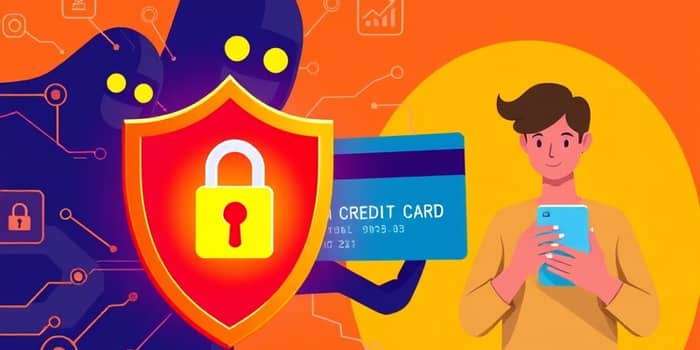
In today's digital age, credit card fraud is no longer a rare occurrence but a widespread and escalating menace that impacts millions globally.
As we embrace online shopping and cashless payments, the risk of financial theft has surged, making it crucial to stay informed and vigilant.
The statistics are staggering, with losses climbing year after year, but knowledge is your first line of defense.
The Alarming Scale of Modern Credit Card Fraud
Credit card fraud has reached unprecedented levels, transforming into a global epidemic.
In 2023 alone, global fraud losses hit $33.83 billion, and projections suggest this could soar to $43 billion by 2026.
In the U.S., identity fraud losses spiked to $12.5 billion in 2024, marking a 25% increase from the previous year.
Reports indicate that over 62 million Americans faced fraudulent charges in 2024, highlighting how pervasive this issue has become.
Demographic insights reveal that adults aged 30-39 file the most reports, while younger adults experience higher monetary losses.
This trend underscores the need for tailored prevention strategies across all age groups.
Fraud rates are rising for 67% of financial institutions in 2025, signaling that no one is immune.
Understanding these numbers is the first step toward protecting yourself from financial harm.
Common Types and Methods of Credit Card Fraud
To combat fraud effectively, you must recognize the various tactics used by criminals.
Card-not-present fraud dominates, accounting for 73% of all cases and driving significant losses in e-commerce.
Synthetic identity fraud, which involves creating fictitious identities, has grown by 153% and causes 80% of credit card fraud losses.
New account fraud is the most common subtype, with hundreds of thousands of reports annually.
Skimming and e-skimming methods exploit physical and digital vulnerabilities, costing the U.S. around $1 billion each year.
Phishing and social engineering attacks trick users into revealing sensitive information, while account takeover attempts have surged by 141% since 2021.
Impersonation scams affect over 85% of attacks, making them a prevalent threat.
Here is a table summarizing key fraud types to help you identify and understand them better:
Recognizing these methods empowers you to spot red flags and take immediate action.
For instance, be wary of unsolicited emails or unfamiliar transaction alerts on your accounts.
Emerging Threats and Trends in Fraud
The landscape of credit card fraud is constantly evolving, with new dangers on the horizon.
Artificial intelligence and deepfakes are expected to fuel a crime wave in 2026, refining scams to near-perfect accuracy.
While AI aids in fraud detection with 95% accuracy, it also enables sophisticated attacks like deepfake documents for credit applications.
Cross-border fraud and digital banking rises add complexity, with crypto and lending fraud increasing by 38% year-over-year.
Large banks face losses four times the industry average, and credit unions are particularly vulnerable to impersonation attacks.
Technological advances, such as biometrics and real-time analytics, offer hope but require consumers to stay updated.
This shift from back-office prevention to frontline consumer awareness is critical for staying ahead of criminals.
By embracing new tools and remaining cautious, you can navigate these emerging threats with confidence.
Your Practical Guide to Prevention Strategies
Protecting yourself from credit card fraud involves adopting proactive habits and using available tools.
Start by monitoring your accounts regularly; 78% of consumers review statements weekly, which is a simple yet effective step.
Set up transaction alerts on your cards to detect unauthorized activity immediately.
Use credit monitoring services to track new accounts and score changes, alerting you to potential identity theft.
Avoid risky behaviors like storing card information in browsers, which 42% of people do, or using public Wi-Fi for transactions.
Here is a checklist to integrate into your routine:
- Check bank and credit card statements at least weekly for unusual charges.
- Enable real-time transaction alerts via text or app notifications.
- Review your credit reports quarterly from major bureaus.
- Use multi-factor authentication for all financial accounts.
- Employ password managers instead of browser storage for enhanced security.
Industry tools, such as AI-driven detection systems, offer 95-98% accuracy in identifying fraud.
Hyper-personalized alerts and biometric verification, like fingerprint or facial recognition, add layers of protection.
By combining these strategies, you can create a robust defense against financial theft.
Consumer Behavior and Its Impact on Fraud
Your daily habits play a significant role in either exposing or shielding you from credit card fraud.
Studies show that 8 in 10 Americans engage in risky behaviors, such as password reuse, which increases vulnerability.
Seniors, while filing fewer reports, often face higher losses due to slower detection and recovery processes.
Younger adults lose money in 44% of fraud cases, emphasizing the need for education across all demographics.
Confidence in fraud prevention is wavering, but small changes can make a big difference.
For example, using spending alerts helps 62% of victims detect fraud within minutes or hours.
Here are additional best practices to strengthen your financial security:
- Avoid using free VPNs for sensitive transactions, as only 8-10% of people do this safely.
- Regularly update passwords and avoid sharing them across multiple sites.
- Be cautious of phishing attempts by verifying sender emails and links.
- Monitor for dark web leaks of your personal information through credit services.
- Educate family members, especially older adults, on common scam tactics.
Generic alerts are often insufficient; opt for omni-channel monitoring that uses behavioral signals for early detection.
By adopting these habits, you not only protect yourself but also contribute to a safer digital ecosystem for everyone.
Empowering Yourself Against Financial Threats
Credit card fraud may be on the rise, but you have the power to fight back with knowledge and action.
Start by assessing your current habits and implementing the prevention strategies discussed.
Stay informed about emerging trends, such as AI-driven scams, to anticipate and counter new threats.
Remember, vigilance is key; a few minutes spent checking statements can save you from significant financial loss.
Share this information with friends and family to build a community of awareness and support.
With tools like credit monitoring and AI detection at your disposal, the future of fraud prevention is bright.
Take charge today—your financial security is worth the effort, and every step you take makes a difference.
References
- https://www.biia.com/synthetic-identity-fraud-statistics-2026-hard-numbers-big-threats/
- https://paycompass.com/blog/credit-card-fraud-statistics/
- https://www.johnmarshallbank.com/resources/security-center/fraud-facts-and-statistics/
- https://www.fico.com/blogs/credit-card-fraud-detection-2025-trends-and-interventions
- https://www.self.inc/info/credit-card-fraud-statistics/
- https://www.clearlypayments.com/blog/credit-card-fraud-statistics-in-2024-for-usa/
- https://lifelock.norton.com/learn/credit-finance/credit-card-fraud-statistics
- https://www.security.org/digital-safety/credit-card-fraud-report/
- https://thefinancialbrand.com/news/credit-card-trends/the-credit-card-ai-crime-wave-and-how-to-fight-back-in-2026-194713
- https://fortune.com/2026/01/13/ai-fraud-forecast-2026-experian-deepfakes-scams/
- https://www.kaggle.com/datasets/mlg-ulb/creditcardfraud
- https://use.expensify.com/blog/credit-card-statistics
- https://snappt.com/blog/fraud-trends/