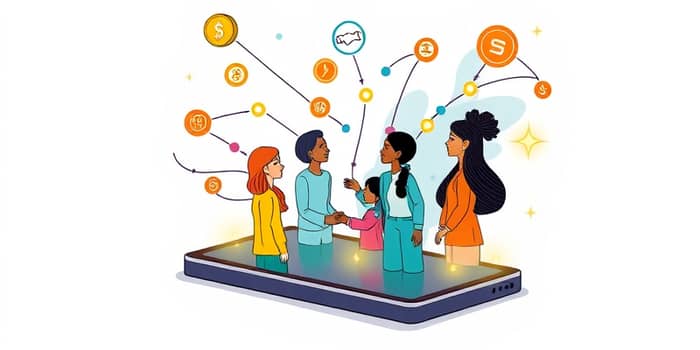
In today's digital age, peer-to-peer lending has emerged as a transformative force in the financial world.
This innovative model connects borrowers directly with investors, creating a more accessible and efficient system for borrowing and investing.
By bypassing traditional banks and financial institutions, it democratizes access to credit and offers new opportunities for growth.
Peer-to-peer lending platforms serve as the bridge, enabling seamless transactions through technology.
Understanding Peer-to-Peer Lending
At its core, peer-to-peer lending is a method where individuals can lend and borrow money without intermediaries.
It utilizes specialized online platforms to match those in need of funds with those willing to invest.
This approach has gained popularity due to its simplicity and speed, revolutionizing how people handle finances.
It appeals to a wide range of users, from consumers seeking loans to investors looking for better returns.
How Peer-to-Peer Lending Works
The process is straightforward yet powerful, designed to streamline borrowing and investing.
- Borrowers apply online by providing personal and financial details for credit assessment.
- Platforms evaluate this data and assign credit grades or risk ratings to each loan.
- Investors browse these listed loans and choose to fund them based on their preferences.
- Once funded, the platform facilitates the loan disbursement and manages repayments.
- Both parties benefit from reduced paperwork and faster turnaround times.
This system offers faster access to funds, often within days, compared to traditional methods.
It also allows investors to diversify their portfolios across multiple loans easily.
Market Size and Growth Projections
The global peer-to-peer lending market is expanding rapidly, driven by technological advancements.
Estimates vary, but it is projected to reach over a trillion dollars in the coming years.
This growth is fueled by increasing fintech adoption and demand for alternative financing options.
North America currently holds a significant share, highlighting its leadership in this sector.
This table illustrates the dynamic nature of the market, with a global market exceeding billions.
Innovations like artificial intelligence are enhancing risk assessment and efficiency.
Loan Types and Their Significance
Peer-to-peer lending caters to various needs, making it versatile and inclusive.
- Personal loans dominate the volume, often used for debt consolidation or emergencies.
- Business loans support small and medium enterprises, fostering entrepreneurship.
- Real estate and other specialized loans are growing segments with unique opportunities.
This diversity facilitates personal and business loans, addressing gaps in traditional banking.
It empowers underserved borrowers who might struggle with conventional credit systems.
Advantages for Borrowers
Borrowers find peer-to-peer lending appealing for several reasons.
- Easier access to credit, even with imperfect credit scores.
- Competitive interest rates that can be lower than credit cards.
- Flexible terms and purposes, from home improvements to startup funding.
- Streamlined processes that reduce waiting times and bureaucratic hurdles.
These benefits make it an attractive option for those seeking faster access to funds.
It transforms borrowing into a more personalized and efficient experience.
Advantages for Investors
Investors are drawn to peer-to-peer lending for its potential returns and accessibility.
- Higher yields compared to traditional savings accounts or bonds.
- Opportunities for diversification across multiple loans to mitigate risk.
- Transparent platforms that provide detailed borrower information and risk metrics.
- Passive income streams that can be managed online with ease.
This model provides higher returns for investors, making it a compelling investment choice.
It allows individuals to participate directly in the lending market with minimal barriers.
Risks and Challenges
Despite its benefits, peer-to-peer lending comes with inherent risks that require careful consideration.
For borrowers, there can be higher interest rates for those with lower credit scores.
Fees and potential impacts on credit history are important factors to weigh.
- Default risk where borrowers may fail to repay, leading to losses for investors.
- Platform risk, including the possibility of fraud or operational failures.
- Lack of government protection, unlike insured bank deposits.
- Regulatory uncertainties that can affect market stability and growth.
These challenges highlight the need for careful due diligence before participating.
Understanding these risks is crucial for making informed decisions in this evolving landscape.
Comparison with Traditional Banking
Peer-to-peer lending differs significantly from conventional bank loans in key aspects.
It offers more flexibility and speed, but with less regulatory oversight and protection.
This contrast makes it essential for users to evaluate their options based on individual needs.
The innovation in peer-to-peer lending transforms the lending landscape by introducing new dynamics.
Trends and Future Innovations
The future of peer-to-peer lending is shaped by ongoing technological advancements.
- Increased use of AI and machine learning for enhanced credit scoring and risk management.
- Growth in niche areas like green loans and crypto-backed financing.
- Partnerships with traditional banks to combine credibility with innovation.
- Expansion into emerging markets, broadening global access to credit.
These trends leverage artificial intelligence for assessments, improving accuracy and efficiency.
They also appeal to underserved borrowers, promoting financial inclusion worldwide.
Conclusion
Peer-to-peer lending represents a modern and dynamic approach to borrowing and investing.
It combines technology with finance to create opportunities that were previously inaccessible.
By understanding its mechanisms, benefits, and risks, users can harness its potential effectively.
This model continues to evolve, driven by innovation and a commitment to financial empowerment.
Embracing peer-to-peer lending can lead to more flexible and rewarding financial experiences for all involved.
References
- https://moneysmart.gov.au/managed-funds-and-etfs/peer-to-peer-lending
- https://absrbd.com/post/peer-peer-p2p-lending-statistics
- https://www.jgwentworth.com/resources/mp-guide-to-peer-to-peer-loans
- https://www.cervicornconsulting.com/peer-to-peer-lending-market
- https://www.kuflink.com/advantages-and-disadvantages-of-peer-to-peer-lending/
- https://www.skyquestt.com/report/peer-to-peer-lending-market
- https://www.onemainfinancial.com/resources/loan-basics/what-is-peer-to-peer-lending
- https://www.cognitivemarketresearch.com/regional-analysis/north-america-peer-to-peer-lending-market-report
- https://corporatefinanceinstitute.com/resources/wealth-management/peer-to-peer-lending/
- https://www.precedenceresearch.com/alternative-financing-market
- https://www.equifax.com/personal/education/personal-finance/articles/-/learn/peer-to-peer-lending/
- https://www.technavio.com/report/peer-to-peer-lending-market-analysis
- https://www.southindianbank.bank.in/blog/general-topics/how-peer-to-peer-lending-works-and-what-it-means-for-borrowers