As 2026 unfolds, the global economy grapples with the profound impacts of clustered shortages across water, energy, food, minerals, and land. Once perceived as mere supply chain disruptions, these deficits have escalated into balance-sheet crises and systemic fragility, reshaping markets and communities. Yet within this turbulence lie the seeds of resilience, innovation, and, ultimately, abundance.
Introduction: The 2026 Scarcity Shock
The year 2026 marks a turning point. Global growth has slowed to 2.7%—below pre-pandemic levels—amid persistent structural volatility from extreme weather, geopolitical tensions, and evolving regulations. What began as sporadic supply disturbances in 2025 now manifests as synchronized shocks in energy, water, and transportation networks.
High debt burdens and subdued investment compound these challenges, leaving businesses and households vulnerable to price spikes and shortages.
Defining Resource Shortages
Scarcity extends far beyond oil and gas. It encompasses:
- Water for agriculture, industry, and cooling, strained by drought and over-extraction.
- Energy in all forms, from electricity to transportation fuels, challenged by aging grids and supply bottlenecks.
- Agricultural commodities—grain, sugar, cocoa, coffee—that face climate-driven yield declines.
- Critical minerals like lithium, cobalt, and rare earths essential for renewable technologies and electronics.
- Land and ecosystems, threatened by deforestation, degradation, and biodiversity loss.
Rising demand and unsustainable extraction patterns push finite reserves toward irreversible depletion.
Human and Food Security Impacts
The humanitarian toll is staggering. An estimated 318 million people confront crisis-level hunger in 2026—double 2019 figures. Acute food insecurity has surged by 20% since 2020, leaving 770,000 facing famine conditions.
In low-income countries, 71% of the population cannot afford healthy diets, while globally, up to 3 billion struggle to meet basic nutritional needs. Conflict zones in Gaza, Sudan, and 14 additional hotspots intensify these pressures, with climate extremes and inflationary shocks aggravating supply disruptions.
Water and Agricultural Vulnerabilities
Approximately one-quarter of global crop production occurs in areas of unreliable water supply. Ten countries—including China, India, and the United States—account for 72% of irrigated crops, two-thirds of which face high-to-extreme water stress.
Some 1.42 billion people live under severe water vulnerability, including 450 million children. As farmland expands, land degradation drives 90% of global deforestation, undermining both food security and ecosystem services.
Economic and Business Cascades
Shortages ripple through corporate balance sheets:
- Margin shock: Input cost increases of 15–50% erode profits by up to 4.2 percentage points.
- Revenue impact: On-time, in-full delivery rates decline, triggering penalties and lost sales.
- Working capital strain: Inventory days stretch from 42 to 65, stretching cash cycles.
- Contract and compliance risks: Force majeure filings rise alongside ESG-related sourcing disputes.
Although inflation is projected to ease to 3.1% in 2026, high prices continue to strain household incomes and corporate budgets.
Regional Dynamics and Case Studies
In the Caribbean, IslandFresh Snack Foods saw ingredient costs surge 28% and packaging by 19%, stretching inventory from four to nine weeks.
Geopolitical and Trade Pressures
Geoeconomic tensions rank as the top business threat in 2026. One-third of executives cite tariff hikes—particularly U.S. Section 232 measures on semiconductors and minerals—as major risks. Competition for critical minerals intensifies strategic rivalries, while partners consider retaliatory barriers against China’s exports.
Early Warning Indicators and Stress-Testing
Effective early-warning systems track:
- Supplier lead times and fill rates
- Commodity price indices and energy volatility
- Freight congestion and FX stress
- Rainfall, drought metrics, and supplier financial health
Scenario modeling of price spikes (15%, 30%, 50%) and supply shortfalls (80% availability) helps companies quantify impacts on EBITDA, cash flow, and covenant compliance.
Pathways from Scarcity to Abundance
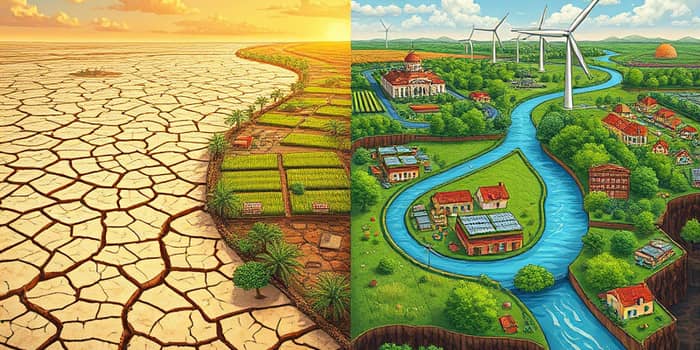
Despite daunting challenges, pathways to resilience and abundance are emerging. Key strategies include:
Supplier diversification and resource mapping to reduce concentration risk.
Indexed pricing and buffer inventories to manage cost volatility.
Targeted investments and policy reforms in water stewardship, sustainable agriculture, and critical minerals processing.
Monetary easing, robust consumer spending, and gradually stabilizing commodity markets offer economic tailwinds. Innovations in renewable energy, precision agriculture, and circular economy models signal hope.
Global collaboration—backed by data-driven stress tests and agile policy frameworks—can transform scarcity into abundance, fostering a more resilient, equitable future.
References
- https://www.dawgen.global/natural-resource-shortages-the-silent-balance-sheet-shock-of-2026/
- https://www.wfp.org/global-hunger-crisis
- https://desapublications.un.org/publications/world-economic-situation-and-prospects-2026
- https://www.worldbank.org/en/topic/agriculture/brief/food-security-update
- https://unctad.org/news/mirage-global-economic-resilience
- https://concernusa.org/news/world-hunger-facts/
- https://www.atlanticcouncil.org/dispatches/five-trends-to-watch-in-the-global-economy-in-2026/
- https://www.wri.org/insights/growing-water-risks-food-crops
- https://www.sei.org/features/three-trends-that-will-shape-2026/
- https://www.weforum.org/publications/global-risks-report-2026/in-full/global-risks-report-2026-chapter-1/
- https://knowledge.insead.edu/responsibility/five-global-trends-business-and-society-2026
- https://knowledge4policy.ec.europa.eu/foresight/topic/aggravating-resource-scarcity/more-developments-relevant-aggravating-resource-scarcity_en
- https://healthpolicy-watch.news/world-enters-new-era-of-water-crisis-un-says/
- https://monthlyreview.org/articles/global-resource-depletion/