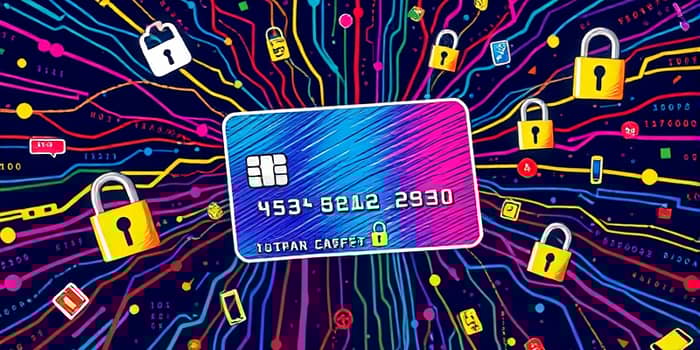
Every time you swipe, tap, or click a credit card, you leave behind a trail of information that can shape your financial identity. In an era where data is the new currency, understanding how your spending habits, device usage, and online behavior converge creates a powerful narrative about your creditworthiness. This article will guide you through the complex world of digital footprints and credit cards, illuminating the hidden processes and offering practical strategies to maintain control over your personal data.
Whether you’re a seasoned cardholder or new to digital payments, recognizing the stakes and adopting proactive measures can make the difference between secure transactions and unwanted exposure. Let’s explore how these invisible data trails work and what steps you can take to safeguard your financial privacy.
In the sections that follow, we will break down the mechanics of data collection, explore how credit scores are evolving, highlight emerging threats, and outline best practices for businesses and individuals. Armed with this knowledge, you can approach every transaction with confidence and clarity.
Understanding Your Digital Footprint
At its core, a digital footprint is the collective record of your online interactions. From the websites you visit to the devices you use, each action adds to your profile. Digital footprints encompass data trails including web cookies, IP addresses, and purchase timestamps. For credit cards, every transaction—whether it’s a morning coffee or an overseas flight—becomes part of a detailed chronology of your behavior.
Financial institutions and third-party services merge these details with alternative data sources such as social media activity, psychometric assessments, and utility payments. This extensive aggregation aims to create a comprehensive view of your reliability and risk, often without explicit notification.
How Credit Card Data is Collected and Used
Credit card transactions generate vast amounts of information. When you initiate a purchase, details like the amount, date, time, and geographic location are captured by the merchant’s payment processor. These records are then shared with card networks, banks, and analytics firms.
Credit card transactions generate rich digital footprints that fuel marketing campaigns, risk assessments, and personalized offers. Retailers analyze spending categories—restaurants, travel, retail—to tailor promotions. Fintech innovators leverage device metadata and browsing behavior to evaluate applicants, especially in regions where traditional credit history is sparse.
Under regulations like the Gramm-Leach-Bliley Act, institutions must disclose data-sharing practices, yet consumers often remain unaware of how their information is bought and sold. Modern surveys by the CFPB now require transparency from the largest issuers, but gaps persist between policy and everyday experience.
Credit Scoring and Predictive Analytics
Traditional credit scores rely on payment history and credit utilization, but new models incorporate behavioral signals. By using data-driven credit scoring models, lenders can assess borrowers who lack formal credit records. Research shows that simple footprint variables such as operating system choice and search channel can rival bureau scores in predicting defaults.
Moreover, lenders are increasingly incorporating alternative data sources such as social media activity to gauge customer reliability and detect potential stress signals. These non-traditional inputs can reveal changes in life circumstances—job loss, relocation, major life events—that might not immediately surface through standard financial records.
Statistical studies reveal that supplementing core files with behavioral signals extracted from device telemetry and browsing patterns can improve default prediction accuracy by significant margins. Institutions in Europe and Asia have reported AUC enhancements when blending traditional and alternative data streams.
Privacy and Security Risks
Despite its benefits, this ecosystem creates vulnerabilities. Data breaches at payment processors expose millions of records. Real-time fraud detection measures can flag anomalies, yet sophisticated phishing and malware attacks continue to harvest credentials. Malicious actors exploit stolen details to orchestrate identity theft and account takeovers.
Additionally, pervasive tracking builds detailed profiles that extend beyond financial behavior into personal preferences and lifestyle attributes. Unauthorized sharing with data brokers amplifies these risks, potentially leading to discriminatory pricing or unwelcome solicitations.
Regulations such as the GDPR and CCPA grant individuals rights to access, correct, and delete personal data, but enforcement in the payments sector varies by jurisdiction. Consumers should exercise these rights to limit data retention and require transparency regarding third-party sharing.
Secure Practices and Compliance
Protecting sensitive payment information requires adherence to industry standards and proactive security measures. Merchants and service providers must implement tokenization and SSL encryption to secure data in transit and at rest. PCI DSS compliance, enforced globally, sets stringent requirements for storing, processing, and transmitting cardholder data.
- Use multifactor authentication for all payment portals
- Adopt a zero-trust security architecture model for internal networks
- Conduct regular penetration testing and automated compliance checks
Card-present transactions—using EMV chips and PINs—remain inherently more secure than online payments. Nevertheless, consumers should monitor statements, set spending alerts, and report suspicious activities promptly to issuers.
Practical Tips for Consumers
Empowering yourself starts with awareness and simple habits. Here are actionable steps to take charge of your digital footprint:
- Review and declutter permissions granted to shopping apps
- Limit data sharing by choosing privacy-focused email providers
- Enable virtual card numbers or one-time tokens for online purchases
- Regularly update devices and install trusted security software
By adopting these practices, you cultivate robust consumer protection strategies that strengthen your privacy and financial security. Remember, every swipe not only funds a purchase but also contributes to a larger narrative about your trustworthiness.
Looking ahead, innovations in privacy-preserving computation and federated learning promise to reconcile analytics with confidentiality, delivering smarter credit solutions without compromising individual rights.
In a world driven by data, staying informed and proactive ensures you remain in control of your credit history and personal information. Embrace the tools and insights highlighted here to build a safer, more transparent payment experience—one that protects both your wallet and your identity.
References
- https://finezza.in/blog/digital-footprint-data-credit-scoring/
- https://www.ucfs.net/how-customer-data-and-credit-is-used-by-credit-card-and-finance-companies/
- https://gr4vy.com/posts/how-to-store-card-data-safely-the-ultimate-guide-for-2024/
- https://www.brside.com/blog/what-can-hackers-find-about-you-in-5-minutes-your-digital-footprint-exposed-(2025)
- https://scholarworks.lib.csusb.edu/cgi/viewcontent.cgi?article=1215&context=jitim
- https://www.wsfsbank.com/resources/decluttering-your-digital-footprint-to-increase-online-security/
- https://www.clearlypayments.com/blog/how-consumer-payment-data-can-be-used-by-businesses/
- https://www.ebsco.com/research-starters/computer-science/digital-footprint
- https://afm.utexas.edu/hbp/part-6/4-credit-card-collections
- https://www.trendmicro.com/en_us/what-is/what-is-zero-trust/digital-footprint.html
- https://www.consumerfinance.gov/about-us/blog/why-were-modernizing-how-we-collect-credit-card-data/
- https://tryriot.com/blog/digital-footprint/
- https://www.financialprofessionals.org/training-resources/resources/articles/Details/credit-card-processing-explained-what-it-is-and-how-it-works
- https://stripe.com/resources/more/how-to-store-customer-card-information-a-quick-guide-to-staying-compliant