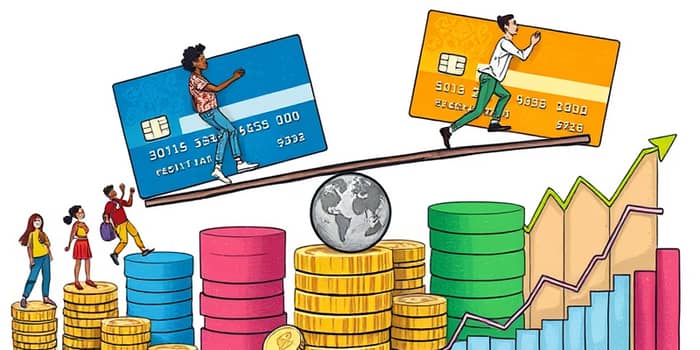
Every credit card comes with a built-in guardrail: the credit limit. While it offers purchasing power, this threshold can also determine the health of your finances.
Understanding how these limits influence your credit utilization, debt levels, and lender decisions empowers you to take control of your financial journey.
Understanding Credit Card Limits and Utilization
Credit card limits represent the maximum amount you can borrow at any given time. They serve as both a convenience and a constraint.
Financial experts agree that keeping utilization below 30% of your total available credit is crucial. When your balance approaches that threshold, credit scoring models start viewing you as a higher risk.
For many households earning under $50,000 annually, utilization rates can climb to 80–90% on delinquent accounts, leaving little room for emergencies and increasing the likelihood of missed payments.
Consequences of High and Low Credit Limits
Your credit limit can rise or fall depending on market conditions, personal payment history, and broader economic trends.
When issuers decrease a credit line, known as a credit line decrease (CLD), consumers can see available credit cut nearly in half. For example, prime-score borrowers experienced a drop from $6,155 to $3,092 on average, while subprime borrowers saw reductions from $1,567 to $792.
This sudden contraction can spike utilization overnight, sometimes pushing it past 75%, and lead to score declines even if you haven’t increased your spending.
On the other hand, proactive limit increases can provide a breathing room during tight months. Since 2022, average limits have grown by 4.4% annually, with Gen Z seeing rises from $12,899 in 2023 to $14,195 in 2024.
However, it’s essential to use new credit responsibly. A higher limit should serve as a buffer, not an invitation to overspend.
Current Debt Landscape: Key Statistics
The scale of American credit card debt is both staggering and instructive.
These figures highlight a delicate balance: while total debt rises, delinquency rates remain relatively stable, suggesting borrowers are under pressure but generally maintaining payments.
Financial Health and Broader Impacts
Credit card debt doesn’t just affect individual statements—it ripples through families, communities, and the broader economy.
Debt-related stress affects one in five consumers, prompting cuts in essential spending and sometimes leading to job instability. In many households, credit cards have become a necessity for everyday costs amid inflation.
Limit increases can help cushion unexpected expenses like medical bills or car repairs. Yet they can also foster persistent revolving debt, from which banks profit when consumers carry balances month after month.
Strategies for Managing Credit Limits
Effective credit management hinges on disciplined habits and informed decisions.
- Monitor utilization: Aim for under 30% of total available credit.
- Request increases wisely: Use them as back-up funds, not extra spending power.
- Automate payments: Avoid late fees and missed due dates.
Additionally, building an emergency fund can reduce reliance on revolving credit when unexpected costs arise.
Regulatory Context and Consumer Protections
The Credit CARD Act of 2009 reshaped the landscape by banning unsolicited over-limit fees and requiring consumer opt-in. This shift granted cardholders more control and transparency.
During the pandemic, many issuers froze or reduced credit lines when economic uncertainty peaked. Though these measures protected lenders, they sometimes strained consumers by raising utilization rates and limiting purchasing flexibility.
With recent Federal Reserve rate cuts, average APRs have eased slightly from a peak of 23.79% down to more manageable levels, offering some relief to rotational borrowers.
Looking Ahead: Trends and Projections
Forecasts predict credit card debt growth will moderate, reaching approximately $1.18 trillion by the end of 2026—a modest 2.3% increase from 2025, the slowest pace in over a decade.
Despite this slower expansion, the share of long-term debt holders continues to climb. Currently, 61% of cardholders carry balances for over a year, and 31% have held debt for three years or more.
Future regulatory discussions include potential APR caps around 10%. While such limits could lower costs for many borrowers, they might also force two-thirds of consumers to see their lines reduced or closed, disproportionately affecting higher-risk profiles.
Empowering Your Financial Future
Credit limits can be both a safety net and a source of stress. By staying informed and adopting prudent habits, you can turn this dual-edged tool to your advantage.
Remember to track your utilization, pay balances in full whenever possible, and view limit increases as protection against emergencies, not an excuse to overspend.
Your financial health is a long-term endeavor. With deliberate choices and a clear understanding of how credit limits operate, you can build stronger credit, reduce costs, and create lasting stability for yourself and your family.
References
- https://www.nasdaq.com/articles/credit-card-limits-managing-spending-protect-your-financial-health
- https://www.marketplace.org/story/2026/01/13/more-americans-burdened-by-longterm-credit-card-debt-study-says
- https://newschannel9.com/news/local/credit-card-debt-reaches-123-trillion-how-consumers-are-recovering-financially
- https://newsroom.transunion.com/2026-consumer-credit-forecast/
- https://www.bostonfed.org/publications/current-policy-perspectives/2023/credit-card-spending-and-borrowing-since-the-start-of-the-covid-19-pandemic.aspx
- https://www.lendingtree.com/credit-cards/study/credit-card-debt-statistics/
- https://www.experian.com/blogs/insights/the-power-of-proactive-credit-limit-increases/
- https://www.bankrate.com/credit-cards/news/credit-card-debt-report/
- https://bpi.com/the-potential-adverse-consequences-of-a-credit-card-interest-rate-cap-2/
- https://www.newyorkfed.org/microeconomics/hhdc
- https://www.federalreserve.gov/releases/g19/current/
- https://www.dallasfed.org/cd/communities/2025/2502