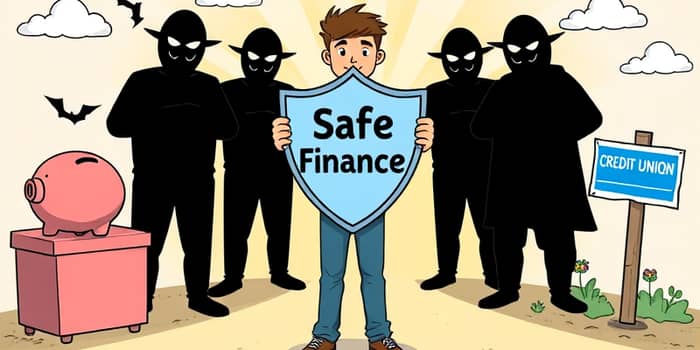
Imagine borrowing money out of desperation, only to find yourself trapped in a cycle of debt with no escape.
This is the harsh reality for over 3 million people in the UK who turned to illegal loan sharks last year.
In the US, predatory lending drains billions from vulnerable households annually.
Such practices thrive on financial exclusion, preying on those rejected by mainstream institutions.
This article empowers you with the tools to recognize, avoid, and overcome these threats.
By understanding the risks and exploring safe alternatives, you can take control of your financial well-being.
The Alarming Scale of Predatory Lending
Predatory lending is not a niche issue; it's a widespread crisis affecting millions globally.
In the UK, recent data shows that nearly one in twelve adults borrowed from illegal lenders in the past year.
These loans often follow rejection from traditional banks, pushing people into dangerous territory.
Younger demographics are disproportionately affected, with 13% of 18-34-year-olds resorting to such options.
In the US, the problem is equally dire.
Payday lending alone involved 20 million loans totaling $8.6 billion in recent years.
Fees from these loans surged, highlighting an escalating financial burden on low-income communities.
Historical context reveals that payday lending grew into a $9 billion industry with exorbitant APRs.
This scale underscores the urgent need for awareness and action.
Key statistics illustrate the magnitude:
- Over 3 million UK adults borrowed from illegal loan sharks in 2024.
- US payday loans drained $2.4 billion in fees, with states like Texas leading in costs.
- Personal loan debt in the US reached $269 billion, with delinquency rates rising.
- Triple-digit APRs are legal in 30 states, perpetuating cycles of debt.
- 93% of Americans seeking emergency loans face rejection, driving them toward predators.
Who Is at Risk and Why
Predatory lenders target specific groups, exploiting vulnerabilities for profit.
Low-income households and working families are prime targets, often struggling with daily expenses.
Communities of color, particularly Black consumers, face higher exposure to these lenders.
This disparity exacerbates existing racial inequalities in wealth and financial access.
Young adults and those with poor credit histories are also at increased risk.
Desperation for essentials like rent or medical bills fuels reliance on these loans.
The cost-of-living crisis has only amplified this trend, leaving many feeling financially stuck.
As one expert notes, illegal lenders thrive on desperation, offering quick cash with hidden traps.
Demographics most affected include:
- 18-34-year-olds, who are more likely to use high-cost credit.
- Individuals rejected by mainstream lenders, seeking emergency funds.
- Residents in states with lax regulations, where triple-digit APRs are common.
- Those without financial education or emergency savings.
Recognizing the Red Flags of Predatory Lenders
Spotting predatory lenders early can save you from financial ruin.
Look for triple-digit APRs that far exceed reasonable rates, often hidden in fine print.
High upfront fees or pressure to borrow more than needed are common tactics.
Lenders that target low-income areas or online platforms to evade state laws should raise alarms.
Legitimate lenders conduct credit checks and assess ability-to-repay, unlike predators.
Short-term loans with balloon payments can trap borrowers in endless rollovers.
Be wary of offers that seem too good to be true, especially after rejection elsewhere.
Red flags to watch for include:
- Interest rates exceeding 100% APR, which are unsustainable for most borrowers.
- Lack of transparency in terms, with hidden fees or unclear repayment schedules.
- Aggressive marketing tactics that prey on fear or urgency.
- No regulatory compliance, such as evasion of state interest caps.
- Requests for collateral like vehicle titles, risking asset loss.
The Devastating Impacts of Predatory Lending
The consequences extend far beyond financial strain, affecting mental and physical well-being.
Borrowers often face massive fees disproportionate to their income, leading to debt spirals.
In the UK, risks include threats of violence from illegal lenders, with 14% reporting such incidents.
Non-financial harms include increased stress, relationship breakdowns, and reduced quality of life.
Predatory lending drains wealth from communities, worsening economic disparities.
Delinquency rates on personal loans highlight the struggle to keep up with repayments.
This traps individuals in cycles where they borrow more to pay off existing debts.
The broader effects ripple through society, exacerbating poverty and inequality.
Key impacts summarized:
- Financial traps with fees that can exceed loan principals over time.
- Non-financial risks like violence or intimidation from unregulated lenders.
- Worsened racial and economic disparities in affected communities.
- Increased delinquency rates, contributing to broader financial instability.
Legal Protections and Regulations
Understanding the legal landscape is crucial for self-protection.
In the US, regulations vary widely by state, creating a patchwork of protections.
Twenty states and Washington D.C. cap APRs at 36% or lower, offering some safety.
However, 30 states allow triple-digit APRs, leaving borrowers vulnerable to exploitation.
Evasion tactics, such as rent-a-bank schemes, undermine these laws by partnering with out-of-state institutions.
In the UK, illegal loan sharks operate outside the law, meaning borrowers have no legal repayment obligations.
Reporting such lenders to authorities is essential for community safety.
Policy proposals aim to strengthen usury laws and enforce caps more effectively.
The table below compares regulatory approaches in key states:
Safe Alternatives and Practical Steps Forward
You can avoid predatory lenders by exploring affordable credit options and building financial resilience.
Mainstream personal loans, with lower average rates, offer a safer path for debt consolidation.
Credit unions and community organizations provide supportive lending with fair terms.
Non-loan alternatives, like budgeting aids or emergency funds, reduce reliance on credit.
Financial education is key; learning to spot red flags can prevent future traps.
Prioritize building an emergency savings buffer to cushion against unexpected expenses.
Always check APRs and terms carefully before borrowing, even from reputable sources.
Steps to protect yourself include:
- Researching lenders thoroughly, reading reviews and checking for regulatory compliance.
- Comparing multiple offers to ensure you get the best possible terms.
- Seeking advice from financial counselors or non-profit organizations.
- Avoiding loans with unclear fees or pressure tactics, no matter how desperate the situation.
- Utilizing resources like the Center for Responsible Lending for guidance and reports.
By taking these proactive measures, you can navigate financial challenges safely.
Remember, predators rely on your lack of options, but knowledge is your greatest shield.
Embrace community support and legal resources to stand strong against exploitation.
Your financial future deserves protection, and with vigilance, you can achieve it.
References
- https://www.moneywellness.com/blog/over-3-million-people-turned-to-loan-sharks-in-the-last-year
- https://www.washingtoninformer.com/cash-strapped-borrowers-predatory-loans/
- https://politicalreview.byu.edu/december-2018/loan-sharks
- https://www.responsiblelending.org/media/new-report-predatory-payday-lenders-took-24-billion-fees-borrowers-year
- https://www.lendingtree.com/personal/personal-loans-statistics/
- https://www.nclc.org/resources/predatory-installment-lending-in-the-states-2025/
- https://www.aol.com/articles/consumer-lenders-stock-could-surge-202500867.html
- https://woodstockinst.org/woodstock-updates/woodstock-institute-2025-26-priorities/
- https://www.troysingleton.com/predatory_lending_the_public_loan_sharks_of_the_lending_industry
- https://home.treasury.gov/news/press-releases/report3076
- https://cei.org/blog/trumps-credit-card-interest-rate-cap-would-kneecap-everyday-americans/
- https://www.bankrate.com/loans/student-loans/predatory-lending-statistics/
- https://fortune.com/2026/01/10/trump-one-year-cap-credit-card-interest-rates-10-percent/
- https://www.globenewswire.com/news-release/2026/01/02/3212245/0/en/New-Study-Reveals-93-of-Americans-Seeking-Emergency-Loans-Are-Rejected-Exposing-Critical-Gap-in-American-Financial-Safety-Net.html
- https://predatorylending.duke.edu/data-analysis/